Foods Dogs Cannot Eat: The Complete List of Toxic and Risky Foods
A complete list of foods that are toxic or risky for dogs: chocolate, grapes, onions, xylitol, and more. Toxic doses, poisoning symptoms, and what to do if your dog eats one.
Published 2 September 2026 · 10 min read
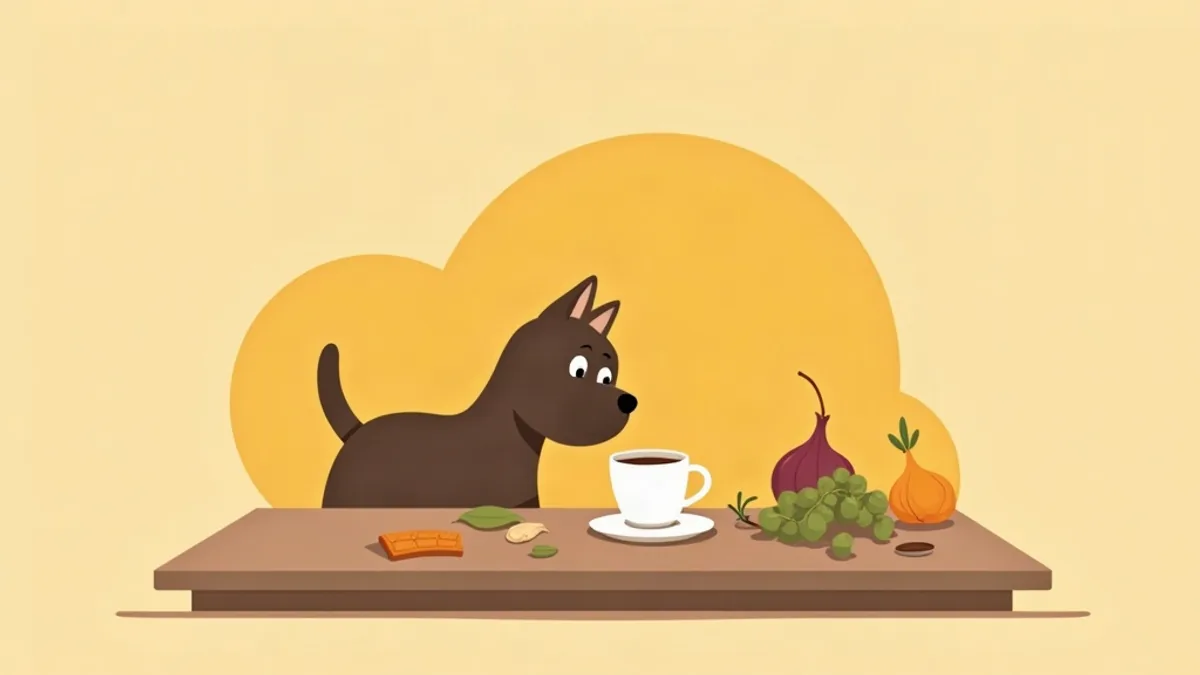
Most dog poisonings aren’t caused by a toxin in the traditional sense, they’re caused by ordinary food from the kitchen. Chocolate, grapes, onions, and xylitol are all toxic to dogs at doses an owner often doesn’t realize are dangerous. This guide covers what’s genuinely hazardous, what just strains digestion, what’s fine in moderation, and what to do if your dog eats something it shouldn’t.
Dangerous (toxic)
For these foods, the issue isn’t habit or long-term weight gain, it’s real poisoning. The amount that causes harm is often far smaller than people expect, and the sooner you act after exposure, the better the outcome.
Chocolate
Chocolate contains theobromine, a methylxanthine that dogs break down far more slowly than humans, so it builds up in the body. Early symptoms, restlessness, vomiting, and diarrhoea, appear from around 20 mg of theobromine per kg of body weight. Serious heart arrhythmias become a risk from 40 to 60 mg/kg, and seizures at higher doses still. The darker the chocolate, the more theobromine it contains, so dark and baking chocolate are more dangerous than milk chocolate. For dosing detail by chocolate type and what to do, see our page on chocolate.
Grapes and raisins
The mechanism behind grape and raisin toxicity still isn’t fully understood; what’s certain is that they cause acute kidney failure in sensitive dogs. No safe dose has ever been established, and the reaction is unpredictable, not clearly tied to the dog’s size or the amount eaten. Symptoms, vomiting, lethargy, and reduced urination, can take up to 24 hours to appear. More detail at grapes and raisins, which are just as risky fresh as dried.
Onion, garlic, and leeks
Allium plants contain thiosulfates, which damage a dog’s red blood cells and lead to haemolytic anaemia. The dangerous dose is estimated at roughly 15 to 30 g of onion per kg of body weight, and cooked, powdered, or dehydrated forms, onion broth or seasoning, for instance, are just as harmful as raw. Symptoms often show up with a 2 to 4 day delay: weakness, pale gums, and dark urine. Detail at onion, garlic, and leeks.
Xylitol (gum, sweeteners)
Xylitol is a sugar substitute found in sugar-free gum, some peanut butters, baked goods, and toothpaste. In dogs it triggers a sharp insulin surge leading to hypoglycaemia from a dose of around 0.1 g/kg. From 0.5 g/kg, liver damage or failure becomes a risk. Symptoms, weakness, vomiting, tremors, and seizures, come on fast, often within 30 to 60 minutes. More at xylitol and chewing gum, which lists common products that contain it.
Alcohol and raw yeast dough
Ethanol depresses a dog’s nervous system far more strongly than a human’s, so even a small amount, spilled beer licked off the floor, say, can cause loss of coordination and, in severe cases, respiratory depression. Raw yeast dough is dangerous twice over: it keeps fermenting in the warmth of the stomach, producing both ethanol and gas, so it risks alcohol poisoning and bloat at the same time. More at alcohol.
Coffee and other sources of caffeine
Caffeine, like theobromine, is a methylxanthine, and acts on the heart and nervous system through a similar mechanism at similar doses. Coffee beans and grounds are highest risk because of their concentration, but also watch for energy drinks, guarana, and some headache medications. Symptoms, restlessness, a racing heart, and tremors, appear quickly after ingestion. More at coffee.
Macadamia nuts
The exact toxin in macadamia nuts isn’t known, but they reliably cause weakness, especially in the hind legs, along with raised temperature and tremors, usually within 12 hours of eating them. Most dogs recover within a day or two even without treatment, but the episode still needs monitoring and, in severe cases, veterinary care, since early on it can be hard to distinguish from other neurological causes.
Avocado
Avocado contains persin, to which birds and horses are extremely sensitive; dogs are far less sensitive, and classic persin poisoning is rare in dogs. The real risk lies elsewhere: the high fat content can trigger pancreatitis, and the large pit is a choking and obstruction hazard. The overall advice is still “don’t feed it,” more out of caution than because of an acute toxin. See avocado for the detail.
Cooked bones
This one isn’t a chemical hazard but a mechanical one. Cooking removes a bone’s moisture and flexibility, so it splinters into sharp fragments when chewed. Those fragments can injure the oesophagus or intestine, get stuck in the stomach, or cause severe constipation. The risk is the same whether the bone came from poultry, pork, or beef. More at cooked bones.
Risky (don’t feed)
This group doesn’t cause acute poisoning the way the foods above do, but repeated or large amounts strain the pancreas, kidneys, and digestion, and can trigger acute problems even from a single incident.
Cured meats, bacon, fries, and pizza
Cured meats and bacon are high in salt and fat and are often seasoned with onion or garlic, a combination that can easily trigger pancreatitis or salt poisoning. Fries and pizza add more salt, fat, and seasonings like onion or garlic powder on top. An occasional small bite won’t hurt; regular scraps from the table will. More at salami, bacon, french fries, and pizza.
Milk and cream
Adult dogs have low lactase activity after weaning, so milk and cream often cause diarrhoea and bloating. Tolerance varies by individual, some dogs handle a small amount fine. A safer alternative is plain yogurt with live cultures, which contains less lactose. More at milk and cream.
Salt
Salty snacks, and even homemade play dough made from flour and salt that kids leave lying around, carry a risk of salt poisoning. It shows up as excessive thirst, vomiting, diarrhoea, and in severe cases tremors or seizures. The risk comes mainly from a larger amount eaten at once, not a pinch of salt in ordinary cooked food. Detail at salt.
Raw pork
In some regions, raw pork carries a risk of Aujeszky’s disease, a viral illness that’s almost always fatal in dogs, on top of the more familiar risks of salmonella and trichinella. Always cook pork thoroughly before feeding it to a dog. More at pork.
Raw dough
Raw dough made with eggs and flour, cookie dough, for instance, carries a salmonella and E. coli risk much like it does for people. That’s a different hazard from the raw yeast dough mentioned above, where fermentation and alcohol are the main danger. A small amount of baked bread usually won’t cause a problem; see bread for detail.
Mushrooms
Wild mushrooms are unpredictable: many species cause liver or kidney failure, and some cause neurological symptoms, and a dog can’t tell an edible mushroom from a toxic one any faster than a person can in the field. Plain cultivated mushrooms, cooked and unseasoned, in a small amount are usually not a problem, but they’re not worth making a regular part of the diet. More at mushrooms.
Walnuts and almonds
Walnuts are riskiest when mouldy, since the mould produces neurotoxins that cause tremors and seizures, and they’re also high in fat with a choking risk. Almonds aren’t as acutely dangerous as macadamia nuts, but they’re hard, poorly digestible, and fatty. Neither makes a good treat. More at walnuts and almonds.
In moderation
Plenty of everyday foods won’t harm a dog in a small amount, fresh, and without added sugar, salt, or seasoning. That includes banana, apple without the core and seeds, carrot, cucumber, plain cooked rice, cooked egg, and plain yogurt without added sugar. Each of these has its own page with a recommended portion by dog size. For a full rundown of dozens of other foods, see our Can Dogs Eat section.
What to do if your dog is poisoned
- Work out what, how much, and when your dog ate. This detail drives everything that follows; if possible, find the packaging or leftover food.
- Call an emergency vet right away, even if your dog still seems fine. With many substances, symptoms only appear hours later, and the sooner treatment starts, often inducing vomiting within 1 to 2 hours of ingestion, the better the outlook. You can also reach a dedicated animal poison control line, such as the ASPCA Animal Poison Control Center in the US; a consultation fee often applies, and your own emergency vet should still be your first call.
- Don’t induce vomiting at home without a vet’s instruction. Hydrogen peroxide, salt, and other home remedies can injure a dog, and with some substances, caustic chemicals or sharp objects, vomiting is directly contraindicated.
- Bring the packaging or leftover food to the vet; it helps identify the substance and estimate the amount quickly.
- Only give activated charcoal on a vet’s instruction. It binds some toxins in the digestive tract, but correct dosing and timing need professional judgement.
Preventing exposure
In the kitchen: keep a lidded bin out of the dog’s reach, don’t leave food or ingredients on the counter edge, and don’t let your dog beg at the table or feed it scraps there.
Visitors: let guests know the dog shouldn’t get anything from the table or from a bag or purse, which often holds gum or sweets containing xylitol.
Holidays: raisins in festive bread and baking, chocolate figures under the tree, and onion-heavy stuffing are yearly classics for emergency vets. Put chocolate gifts under the tree knowing a dog can unwrap them just as fast as the kids can.
The garden: fallen fruit on the ground ferments and contains alcohol, compost can hold mouldy food scraps, and cocoa shell mulch is just as risky for a dog as chocolate itself. On walks in the woods, watch that your dog doesn’t pick up wild mushrooms or unfamiliar berries.
Common questions
How quickly does food poisoning show up in a dog?
It depends on the substance. Xylitol causes a blood sugar crash within 30 to 60 minutes. Chocolate and caffeine produce first symptoms in 2 to 4 hours, with heart problems appearing up to 12 hours later. With grapes and raisins, kidney failure can show up as late as 24 to 72 hours afterward, so even a dog that seems fine needs monitoring and often blood work.
Should I make my dog vomit at home if it eats something dangerous?
No, not unless your vet specifically tells you to and walks you through exactly how. Hydrogen peroxide, salt, and other home remedies can harm a dog just as much as what it ate, and with some substances, sharp objects or caustic chemicals, inducing vomiting is directly dangerous. Call an emergency vet and follow their instructions.
Are cooked bones safer than raw ones?
No, the opposite. Cooking dries out and hardens a bone, so it splinters into sharp fragments when chewed, which can injure the oesophagus, stomach, or intestine, or cause severe constipation. Raw bones carry a lower splintering risk, though they carry other risks (bacteria, cracked teeth), and are never a safe unsupervised substitute for a chew treat.
How much chocolate is dangerous for a dog?
First symptoms appear from around 20 mg of theobromine per kilogram of the dog's body weight; serious heart effects start at 40 to 60 mg/kg. For a 10 kg (22 lb) dog, that means even a relatively small amount of dark chocolate can cause problems, while milk chocolate takes more. There's no established safe dose, so any chocolate a dog eats is worth a call to your vet.
Are emergency vets open at night and on weekends?
Yes, emergency vet services exist specifically for these situations and run around the clock. Poisoning symptoms often appear or worsen overnight, so it's better to call right away than wait until morning. Save your local emergency vet's number in your phone in advance so you're not searching for it during a crisis.
Sources
- ASPCA Animal Poison Control: People Foods to Avoid Feeding Your Pets
- WSAVA Global Nutrition Committee: Global Nutrition Guidelines
- Merck Veterinary Manual: Food Hazards in Small Animals
Last updated 2 September 2026.