Can dogs eat grapes?
Short answer
No. Grapes are highly toxic to dogs and can cause acute kidney failure. There's no known safe amount, and it doesn't depend on breed or size. Call your vet immediately if your dog eats any.
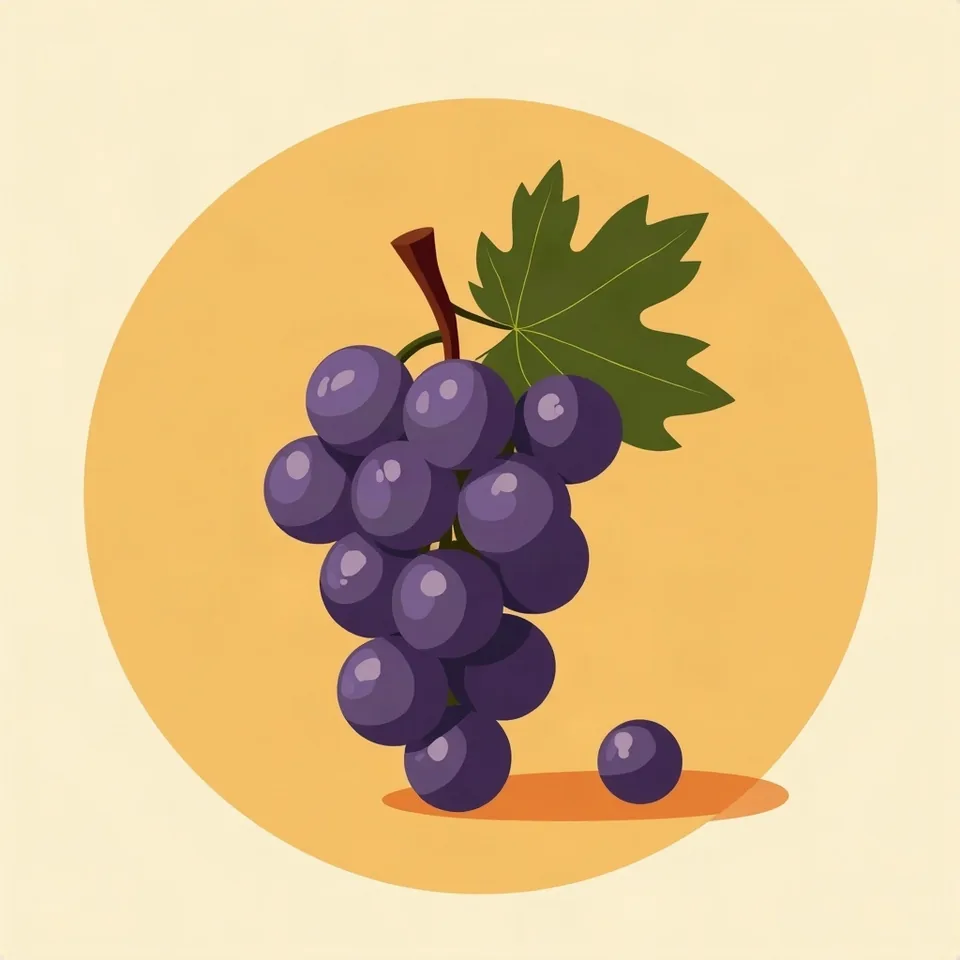
Grapes are among the most dangerous foods for dogs. Even a small amount can trigger acute kidney damage, and individual dogs react unpredictably. Here's why grapes are so risky, what the symptoms look like, and what to do if your dog eats some.
Why not
Toxic compound: tartaric acid (likely toxin, mechanism identified in 2021).
Grapes and raisins can cause acute kidney injury (AKI) in dogs, even from a small amount. The exact mechanism was a mystery for a long time; only a 2021 analysis identified tartaric acid, a natural component of grapes whose level varies by variety, ripeness, and sun exposure, as the likely culprit.
Toxicity doesn't scale with body weight the way it does for other substances. Some dogs show no ill effects after eating a handful of grapes, while another dog gets sick from just a few. The Merck Veterinary Manual notes that as few as one grape or raisin per 4.5 kg (10 lb) of body weight can be risky, though no safe lower threshold has been established.
After ingestion, vomiting, diarrhea, lethargy, and abdominal pain appear within 6 to 12 hours. Kidney damage develops gradually over 24 to 72 hours and shows up as reduced urine production, potentially progressing to no urine at all (anuria), a sign of kidney failure that requires intensive treatment.
Products containing grapes or raisins are also a risk: grape juice and wine, but also raisin muesli, cakes, or trail mix. The skin and seeds are just as risky as the flesh, so it isn't safe to offer even a single grape as a taste, or to use them in cooking or baking.
Rough portion
There is no safe amount. Not a single grape should reach your dog on purpose.
Risks
- Acute kidney failure, which without treatment can progress to a life-threatening state within 1-3 days.
- Unpredictable reactions; you can't estimate from weight or breed whether a particular dog will react mildly or with life-threatening kidney failure.
- Hidden sources of grapes and raisins in baked goods, muesli, chocolate bars, or stewed dishes.
- Delayed onset of kidney failure symptoms, up to 72 hours, by which point damage may already be extensive.
Symptoms to watch for
- Vomiting within a few hours of ingestion
- Diarrhea and abdominal pain
- Lethargy, weakness, loss of appetite
- Increased thirst at first, later reduced or absent urination
- Breath that smells of ammonia (advanced kidney failure)
Your dog already ate grapes. What now?
- Call your vet or an emergency vet immediately, even if your dog ate just a few grapes and seems completely fine.
- If ingestion happened less than 1-2 hours ago, your vet will likely induce vomiting and give activated charcoal to limit how much toxin is absorbed.
- Expect hospitalization and IV fluid therapy for 48 hours even in dogs with no visible symptoms; preventing kidney failure is far more effective than treating it after the fact.
- Expect follow-up bloodwork on kidney values, which vets typically repeat at 24, 48, and 72 hours after ingestion.
Common questions about dogs and grapes
How many grapes are toxic to dogs?
There's no known exact lethal dose, because dogs react very individually. The Merck Veterinary Manual notes that more than one grape per 4.5 kg (10 lb) of body weight can be risky, but even a smaller amount can cause serious kidney damage in a sensitive dog. That's why no amount is considered safe.
My dog ate one grape. Do I need to see a vet?
Yes, call your vet or an emergency vet even after a single grape. There's no way to predict how a given dog will react, and prompt treatment, such as inducing vomiting or giving activated charcoal, significantly lowers the risk of kidney damage. Waiting for symptoms isn't worth the risk.
Are raisins more dangerous than fresh grapes?
Raisins are dried grapes, so the toxin is more concentrated per gram. Even a small handful of raisins can pose a comparable or higher risk than a handful of fresh grapes. Watch out for raisins hidden in muesli, bread, or holiday baking.
Why are grapes toxic to dogs but not to people?
This took decades to figure out. In 2021, researchers identified tartaric acid as the likely culprit; in humans, it isn't absorbed the same way in that quantity as it is in dogs. Exactly why dog kidneys are sensitive to it is still being studied.
Is there a safe amount of grapes for a large dog?
No. Unlike other risky foods, toxicity from grapes and raisins doesn't simply scale with body weight. Even a large dog can get sick from a small amount, while another dog of the same weight eats more with no symptoms. No safe dose has been established for any size of dog.
Safer alternatives

Can dogs eat apples?
Yes, dogs can eat apples. The flesh is safe, full of fiber and vitamin C, and even gives teeth a light mechanical clean. Always remove the core and seeds, though, and don't feed large pieces at once.

Can dogs eat bananas?
Yes, dogs can eat banana, but only as an occasional treat. It's safe and dogs tend to love it, but it's high in sugar. A small dog only needs 2 to 3 slices, a large dog about half a banana.
Can dogs eat blueberries?
Yes, blueberries are one of the healthiest fruits for dogs. They're small, low in calories, and packed with antioxidants, which is why they're often recommended as a training treat or a snack for older dogs.

Can dogs eat watermelon?
Yes, dogs can eat watermelon. The flesh is about ninety percent water, low in calories, and most dogs love it as a summer treat. Just always remove the seeds and the tough rind first.
More from fruit
Can dogs eat avocado?
No, avocado isn't recommended for dogs. It contains persin, which dogs tolerate better than birds or horses do, but the pit is a serious choking and blockage hazard, and the high fat content can trigger pancreatitis.

Can dogs eat dates?
Yes, dogs can eat dates, but only occasionally and never with the pit. They're extremely high in sugar, so at most they work as a tiny, infrequent treat.
Can dogs eat figs?
Yes, a small amount of fresh, ripe, peeled fig is fine for most dogs. Figs are high in sugar and fiber, so they only work as an occasional treat, not a regular part of the diet.
Sources
- Merck Veterinary Manual: Grape, Raisin, and Tamarind Toxicosis in Dogs
- AKC: Can Dogs Eat Grapes? Why Grapes and Raisins Are Dangerous for Dogs
- ASPCA Animal Poison Control: People Foods to Avoid Feeding Your Pets
Last updated 2 September 2026.