Can dogs eat onions?
Short answer
No, onion is toxic to dogs in every form, raw, cooked, dried, or powdered. It damages red blood cells and causes hemolytic anemia. Symptoms often don't show up for a few days, so poisoning is easy to miss.
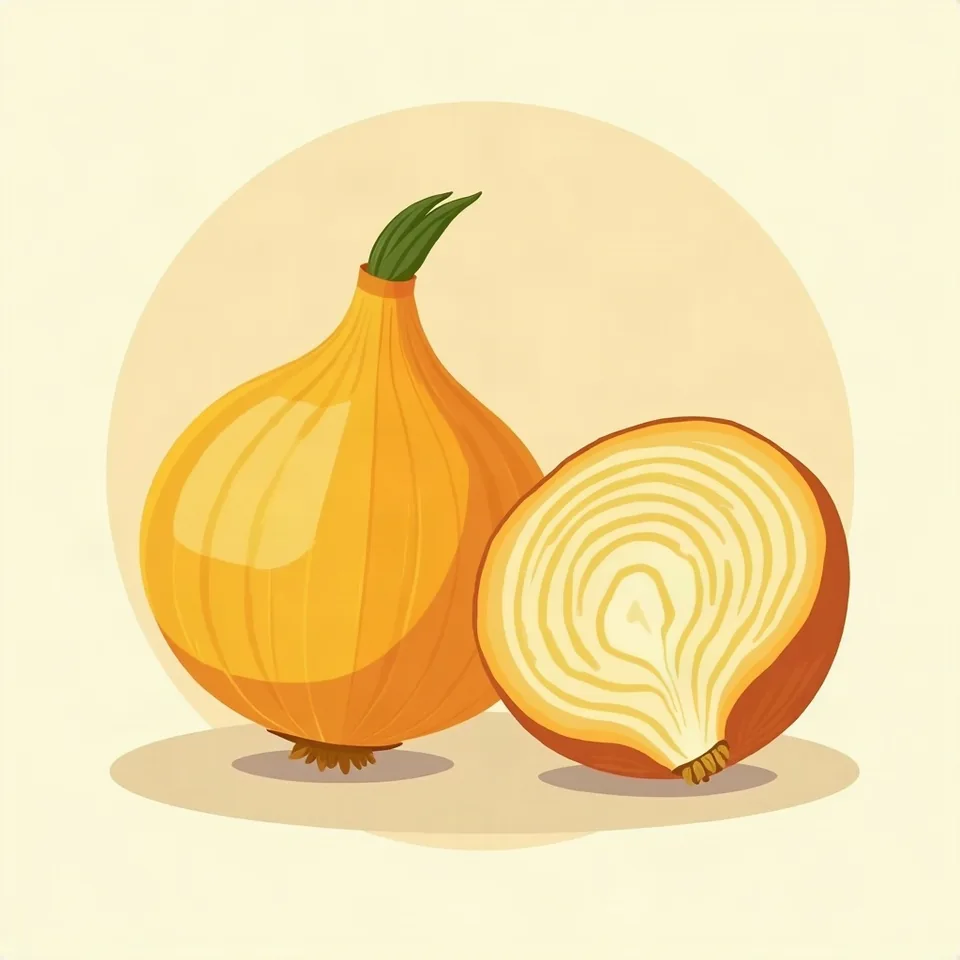
Onion is one of the most dangerous everyday foods for dogs. It contains organosulfur compounds that damage red blood cells and lead to hemolytic anemia. Raw, cooked, and dried onion are all dangerous, including onion powder hidden in leftovers. Here are the doses, symptoms, and what to do after exposure.
Why not
Toxic compound: N-propyl disulfide and thiosulfates (organosulfur compounds from the Allium family).
Onion contains organosulfur compounds, chiefly N-propyl disulfide and thiosulfates, which cause oxidative damage to the membrane of a dog's red blood cells. This produces what are known as Heinz bodies, and the affected cells break down prematurely, leading to hemolytic anemia.
Every form of onion is toxic: raw, cooked, sauteed, dried, onion powder, and dried soup mixes. Cooking doesn't destroy these compounds. Concentrated forms like dried flakes or powder are especially risky, since a small amount packs a large dose of the active compound relative to a dog's body weight.
Clinically significant symptoms are described starting at around 15 to 30 g of raw onion per kilogram of body weight, but the risk also builds with repeated smaller amounts, since the effect accumulates over time. That means even leftovers with onion gravy, fed regularly, are a real danger for small breeds.
Symptoms of poisoning often don't appear until several days after exposure, since the damaged red blood cells break down gradually. That makes onion poisoning easy to miss; an owner often doesn't connect a dog feeling unwell with something eaten days earlier.
Rough portion
There's no safe dose. Even small but repeated amounts, such as leftovers with onion gravy or soup, are dangerous.
Risks
- Hemolytic anemia from oxidative damage to red blood cells (Heinz bodies).
- Toxicity is cumulative: repeated small amounts are just as dangerous as one large dose.
- Concentrated forms (onion powder, dried flakes, soup mixes) are dangerous even in small amounts relative to a dog's weight.
- Symptoms can take several days to appear, which makes early recognition harder.
Symptoms to watch for
- Weakness, lethargy
- Pale or yellowish gums
- Dark or red-brown urine
- Rapid breathing and heart rate
- Vomiting, diarrhea, loss of appetite
- Collapse in severe cases
Your dog already ate onions. What now?
- Contact your vet or an emergency vet right away, even if your dog still seems fine; symptoms can take several days to appear.
- Work out and tell your vet roughly how much onion and in what form (raw, cooked, powder), along with your dog's weight.
- Don't try to induce vomiting at home without your vet's guidance.
- Your vet will typically recommend monitoring blood counts (checking for Heinz bodies and anemia) over the following days, or earlier decontamination if it's been only a short time since exposure.
Common questions about dogs and onions
How much onion is dangerous for a dog?
Clinically significant symptoms are described starting at roughly 15 to 30 g of raw onion per kilogram of body weight, but in practice there's no truly safe dose. The risk also accumulates with repeated smaller amounts, so regular small scraps containing onion are dangerous too, especially for small dogs.
Is cooked onion safer than raw?
No. Cooking doesn't break down the toxic organosulfur compound, so cooked, sauteed, or baked onion is just as dangerous as raw. The same goes for onion powder and dried onion flakes, which are actually even more concentrated.
How long does it take for onion poisoning to show up in a dog?
Early signs can appear within 24 hours, but the more obvious symptoms of hemolytic anemia, like pale gums, weakness, or dark urine, often don't show up until 2 to 5 days after exposure. That makes the poisoning easy to miss and hard to connect to a specific meal.
My dog licked a plate with onion gravy on it, should I worry?
A one-time lick of a trace amount usually isn't a serious risk for a large, healthy dog, but it isn't risk-free either, especially with repeated exposure. For small dogs, puppies, or if you're unsure of the amount, contact your vet or an animal poison control center.
Are scallions and leeks dangerous too?
Yes, the whole Allium family, onion, garlic, leeks, scallions, shallots, and chives, contains the same toxic organosulfur compounds. All of them are dangerous for dogs in every form, raw or cooked, and should be kept out of homemade meals and treats.
Safer alternatives
Can dogs eat carrots?
Yes, carrots are safe for dogs and rank among the best treats you can give them. They're low in calories, full of fiber and beta-carotene, and raw carrots even help clean teeth. Cut them to a size that suits your dog.
Can dogs eat cucumber?
Yes, cucumber is safe for dogs and very low in calories. It's about 95% water, making it a refreshing summer treat and a good option for overweight dogs. Serve it raw, and peel it for dogs with sensitive digestion.
Can dogs eat pumpkin?
Yes, cooked or plain pumpkin flesh is very healthy for dogs, and vets often recommend it to help with digestive upset. Always choose plain pumpkin puree, never pie filling with added sugar and spices.
Can dogs eat zucchini?
Yes, zucchini is safe for dogs and low in calories. It's mostly water with a little fiber and vitamins, and makes a light treat even for dogs on a diet. Serve it raw or cooked, with no salt, oil, or seasoning.
More from vegetables
Can dogs eat beans?
Yes, plain beans that are cooked thoroughly and unsalted are safe for dogs in small amounts and offer a good dose of fiber and protein. Raw beans are toxic due to lectins, though, and canned or baked beans usually carry too much salt and sugar.
Can dogs eat bell peppers?
Yes, but only sweet bell peppers in small amounts. They aren't toxic and contain vitamin C, but hot varieties like chili peppers or jalapenos should never be given, capsaicin irritates the digestive tract and causes painful burning.
Can dogs eat broccoli?
Yes, broccoli is safe for dogs in small amounts. It contains isothiocyanates, which in larger doses irritate the digestive tract and cause gas. Stick to small pieces, raw or cooked, with no seasoning.
Sources
- Merck Veterinary Manual: Garlic and Onion (Allium spp) Toxicosis in Animals
- ASPCA Animal Poison Control: People Foods to Avoid Feeding Your Pets
Last updated 2 September 2026.