Can dogs eat kiwi?
Short answer
Yes, but in moderation. Peeled kiwi flesh is safe for dogs and full of vitamin C, but the fuzzy skin is irritating and hard to digest, and too much of the fruit's fiber can cause diarrhea.
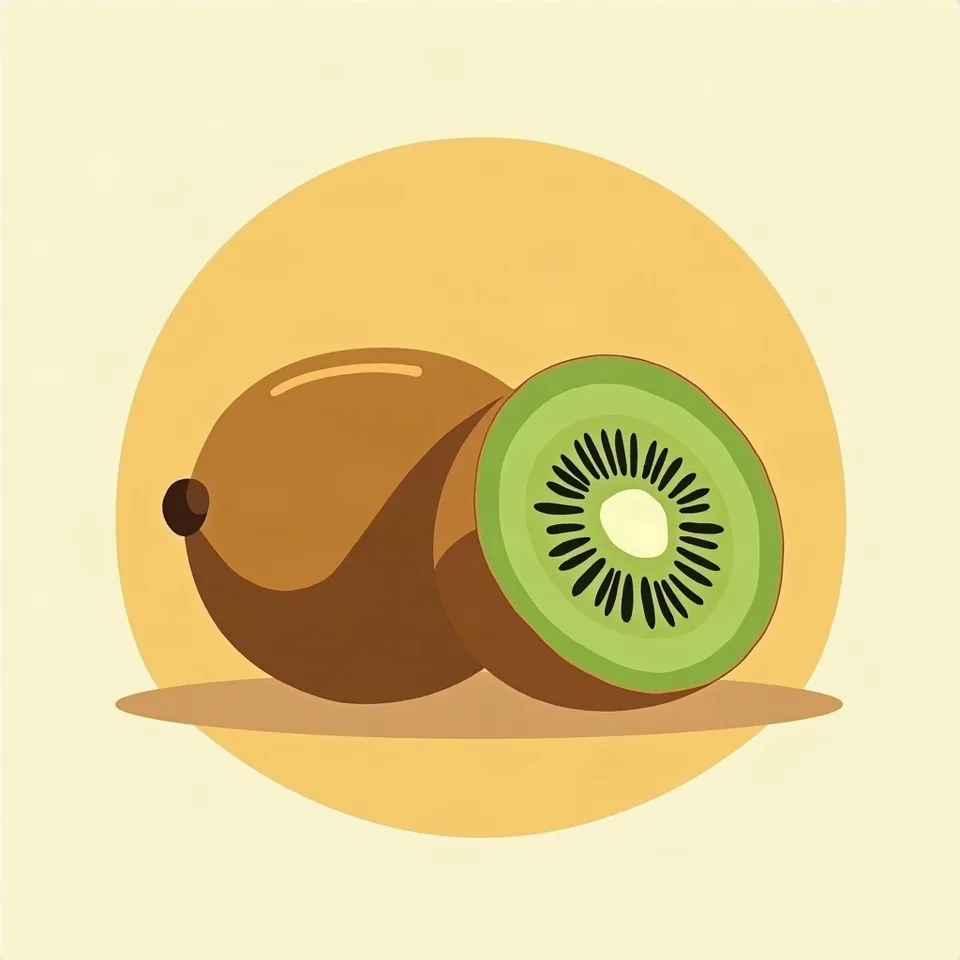
Kiwi is a safe exotic fruit for dogs as long as you serve it peeled and in small amounts. The skin contains tiny irritating crystals, and the higher fiber and sugar content calls for a moderate portion. Here's how to serve kiwi properly.
Why only in moderation
Kiwi flesh contains an especially high amount of vitamin C, along with vitamin K, potassium, and fiber. For dogs, who can produce a good deal of their own vitamin C, it's more of a bonus than an essential nutrient, but in small amounts it does no harm and offers antioxidants similar to other berries or exotic fruit.
The fuzzy brown skin contains microscopic calcium oxalate crystals that can irritate the mouth and throat, similar to certain houseplants like philodendron. The skin is also tough and hard to digest, so it should always be peeled off before serving.
Kiwi is fairly high in fiber and sugar, around 9 g of sugar per 100 g, which in larger amounts can easily trigger loose stool or gas. As a new, exotic fruit, introduce it gradually to see how a particular dog tolerates and digests it.
The small black seeds inside the flesh aren't toxic and are commonly swallowed in small numbers without issue, but in very small breeds even those can contribute to irritation of a sensitive digestive tract, especially in a larger portion without gradually working up to it.
How to serve kiwi
- Always peel the kiwi; the skin isn't recommended because of the irritating crystals and poor digestibility.
- Cut into small cubes or slices sized for your dog.
- Introduce it gradually; one small piece on the first day, then watch your dog's stool.
- A ripe, soft kiwi can be mashed and added in a small amount to a lick mat.
Rough portion
Small dog (under 10 kg / 22 lb): 1-2 small cubes. Medium dog: a couple of slices. Large dog: half a kiwi with the skin removed. Only occasionally, as an exotic treat.
Risks
- Irritation of the mouth or throat from eating the skin, due to calcium oxalate crystals.
- Loose stool or gas from a larger amount of flesh, due to the fiber and sugar.
- An unknown reaction in a dog unfamiliar with exotic fruit; introduce it gradually.
Symptoms to watch for
- Drooling, lip-smacking, or pawing at the mouth after eating the skin
- Loose stool after a larger portion
- Mild gas
Your dog already ate kiwi. What now?
- If your dog ate extra peeled kiwi, monitoring their stool the next day is usually enough.
- If they ate kiwi with the skin on and seem uncomfortable in the mouth, drooling or lip-smacking, offer water and watch to see if the irritation resolves on its own.
- Contact your vet for repeated vomiting or irritation that doesn't go away.
Common questions about dogs and kiwi
How much kiwi can a dog eat?
A small dog is fine with 1-2 small cubes, a medium dog a couple of slices, and a large dog half a kiwi with the skin removed, only as an occasional treat. Kiwi has more fiber and sugar than, say, apple, so a larger portion can easily cause loose stool.
Does kiwi need to be peeled before serving?
Yes, the skin contains tiny calcium oxalate crystals that can irritate the mouth and throat, and it's also tough and hard to digest. Always offer your dog just the peeled flesh, cut into pieces sized for them.
Can puppies eat kiwi?
In small amounts, yes, but because of their more sensitive digestion, start with one small piece of peeled flesh and watch how they react. Puppies are more likely than adult dogs to develop loose stool from the same portion, given kiwi's higher fiber content.
Are kiwi seeds dangerous for dogs?
No, the small black seeds inside the flesh aren't toxic and are commonly swallowed without any issue. In very small breeds, a larger number of seeds might contribute to mild digestive irritation, but on their own they're not a cause for concern.
Why is kiwi listed as a food to feed with caution rather than a fully safe one?
Because of the combination of an irritating skin, higher fiber and sugar content, and the fact that it's an exotic fruit dogs don't normally encounter. The peeled flesh alone in a small amount isn't a problem, but without careful preparation and a moderate portion, the risk of irritation or digestive upset goes up.
Other good treats

Can dogs eat apples?
Yes, dogs can eat apples. The flesh is safe, full of fiber and vitamin C, and even gives teeth a light mechanical clean. Always remove the core and seeds, though, and don't feed large pieces at once.

Can dogs eat blueberries?
Yes, blueberries are one of the healthiest fruits for dogs. They're small, low in calories, and packed with antioxidants, which is why they're often recommended as a training treat or a snack for older dogs.

Can dogs eat strawberries?
Yes, dogs can eat strawberries. They're low in calories, full of vitamin C and antioxidants, and most dogs love them. Serve them washed, with the leafy top removed, and in a reasonable amount because of the sugar content.

Can dogs eat watermelon?
Yes, dogs can eat watermelon. The flesh is about ninety percent water, low in calories, and most dogs love it as a summer treat. Just always remove the seeds and the tough rind first.
More from fruit
Can dogs eat avocado?
No, avocado isn't recommended for dogs. It contains persin, which dogs tolerate better than birds or horses do, but the pit is a serious choking and blockage hazard, and the high fat content can trigger pancreatitis.

Can dogs eat bananas?
Yes, dogs can eat banana, but only as an occasional treat. It's safe and dogs tend to love it, but it's high in sugar. A small dog only needs 2 to 3 slices, a large dog about half a banana.

Can dogs eat dates?
Yes, dogs can eat dates, but only occasionally and never with the pit. They're extremely high in sugar, so at most they work as a tiny, infrequent treat.
Sources
- AKC: Can Dogs Eat Kiwi? Here's What You Should Know
- ASPCA Animal Poison Control: People Foods to Avoid Feeding Your Pets
Last updated 2 September 2026.