Can dogs eat poppy seeds?
Short answer
No, don't give dogs poppy seeds. They offer no nutrients a dog actually needs, they're high in fat, and they almost always show up baked into sugary desserts that are hard on a dog's digestion.
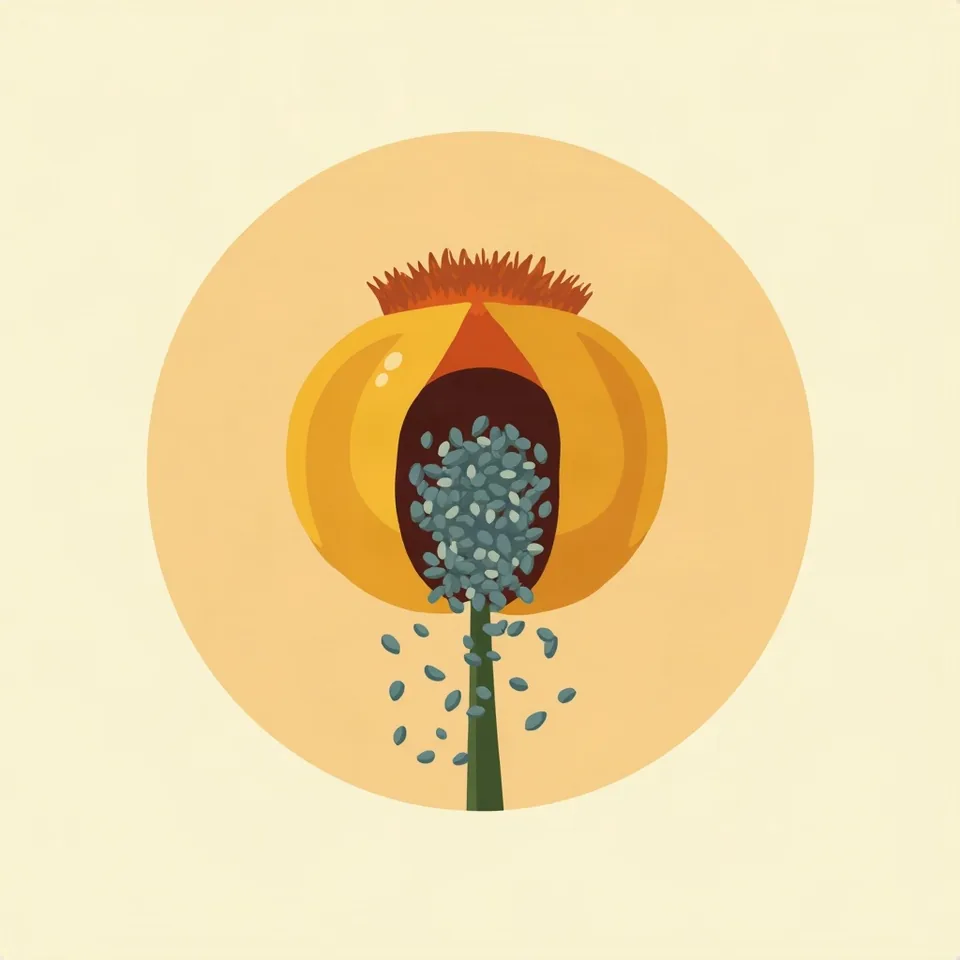
Poppy seeds mostly show up in human kitchens in muffins, bagels, and cakes, which is exactly what makes them a bad fit for dogs. The seeds can also carry trace amounts of opium alkaloids. Here's why poppy seeds don't belong in a dog's bowl and what to do if your dog eats some.
Why not
Poppy seeds aren't acutely toxic to dogs on their own, but they don't offer any nutritional benefit that couldn't be gotten more safely elsewhere. The seeds are around 40% fat, so a larger amount puts strain on the pancreas, and repeated servings raise the risk of pancreatitis.
Poppy seeds come from the opium poppy (Papaver somniferum), the same plant opium is derived from. Mature, cleaned seeds contain only trace amounts of morphine, codeine, and other alkaloids, but pod fragments, immature seeds, or poorly cleaned poppy seeds can carry significantly more. In a small dog, even a modest dose of opiates can cause sedation, slowed breathing, or loss of coordination.
In practice, poppy seeds almost always reach a dog inside baked goods, poppy seed muffins, bagels, cakes, or strudel. Those contain plenty of sugar and fat, often butter or rum, and "diet" versions may even be sweetened with xylitol. So the real risk usually isn't the seeds themselves but what they're typically served with.
Poppy seeds are also very small and hard, and in larger amounts they can irritate the digestive tract of sensitive dogs, leading to bloating or loose stool.
Rough portion
No amount of poppy seeds is a good idea for a dog: plain seeds offer no benefit and carry a risk of alkaloid contamination, while poppy seed baked goods are unhealthy for dogs because of the sugar and fat.
Risks
- Trace opium alkaloids (morphine, codeine) in poorly cleaned or immature poppy seeds can cause sedation and loss of coordination.
- The high fat content of the seeds raises the risk of acute pancreatitis, especially with larger amounts.
- Poppy seed baked goods contain sugar, butter, and often rum or nuts, none of which are safe for dogs.
- The small, hard seeds can irritate the digestive tract of sensitive dogs, causing bloating or diarrhea.
Symptoms to watch for
- Vomiting or diarrhea
- Bloating and abdominal pain
- Unusual tiredness or sedation
- Loss of coordination, stumbling
- Slowed breathing (with higher alkaloid exposure)
Your dog already ate poppy seeds. What now?
- If your dog eats a small amount of plain poppy seeds, just monitor them at home; serious harm is unlikely, though mild digestive upset is possible.
- If your dog eats a larger piece of poppy seed cake or muffin, watch for signs of pancreatitis such as vomiting, abdominal pain, or lethargy.
- If you notice any sedation, stumbling, or slowed breathing, contact your vet right away, this could be a reaction to the alkaloids.
- Bring the packaging or recipe of the baked good with you so your vet knows everything your dog may have eaten.
Common questions about dogs and poppy seeds
Can my dog eat a bite of poppy seed cake?
One small bite probably won't cause serious harm, but it's not something to make a habit of. The cake contains sugar, fat, and often other unsuitable ingredients that raise the risk of digestive upset or pancreatitis. Be cautious about repeated or larger amounts.
Are plain poppy seeds toxic to dogs?
Mature, well-cleaned seeds contain only trace amounts of opium alkaloids and usually won't cause acute poisoning. The risk goes up with immature poppy seeds or pod fragments, where alkaloid levels are higher. Since poppy seeds offer no benefit to a dog anyway, it's easiest to just avoid them.
Can a puppy eat poppy seeds?
No, puppies deserve extra caution here. Their lower body weight means even a small amount of alkaloids or fat can have a bigger effect. Skip poppy seeds and poppy seed baked goods for puppies.
What should I do if my dog eats a lot of poppy seed muffin?
Watch them for several hours, especially for signs of pancreatitis like vomiting, abdominal pain, or lethargy. If those show up, or if the muffin contained rum, nuts, or other risky ingredients, call your vet.
Safer alternatives
Can dogs eat apples?
Yes, dogs can eat apples. The flesh is safe, full of fiber and vitamin C, and even gives teeth a light mechanical clean. Always remove the core and seeds, though, and don't feed large pieces at once.
Can dogs eat carrots?
Yes, carrots are safe for dogs and rank among the best treats you can give them. They're low in calories, full of fiber and beta-carotene, and raw carrots even help clean teeth. Cut them to a size that suits your dog.
Can dogs eat oatmeal?
Yes, cooked oatmeal is safe for dogs and can be a healthy alternative to wheat-based grains, especially for dogs sensitive to gluten. Always serve it cooked and plain, with no flavoring, sugar, or raisins.
More from nuts and seeds
Can dogs eat almonds?
No, almonds aren't recommended for dogs. They're not toxic the way macadamia nuts are, but dogs digest them poorly, a whole nut poses a choking risk, and the high fat content can trigger pancreatitis.
Can dogs eat cashews?
Yes, dogs can eat cashews, but only raw, unsalted ones and in small amounts. Cashews are high in fat, so larger portions can cause digestive upset or contribute to pancreatitis.
Can dogs eat coconut?
Yes, a small piece of fresh coconut flesh with the shell removed usually won't hurt a dog. Because of the high fat content and the risk of injury from the hard shell, though, coconut should stay an occasional treat.
Sources
- Merck Veterinary Manual: Food Hazards in Dogs and Cats
- ASPCA Animal Poison Control: People foods to avoid feeding your pets
Last updated 10 September 2026.