Can dogs eat coconut?
Short answer
Yes, a small piece of fresh coconut flesh with the shell removed usually won't hurt a dog. Because of the high fat content and the risk of injury from the hard shell, though, coconut should stay an occasional treat.
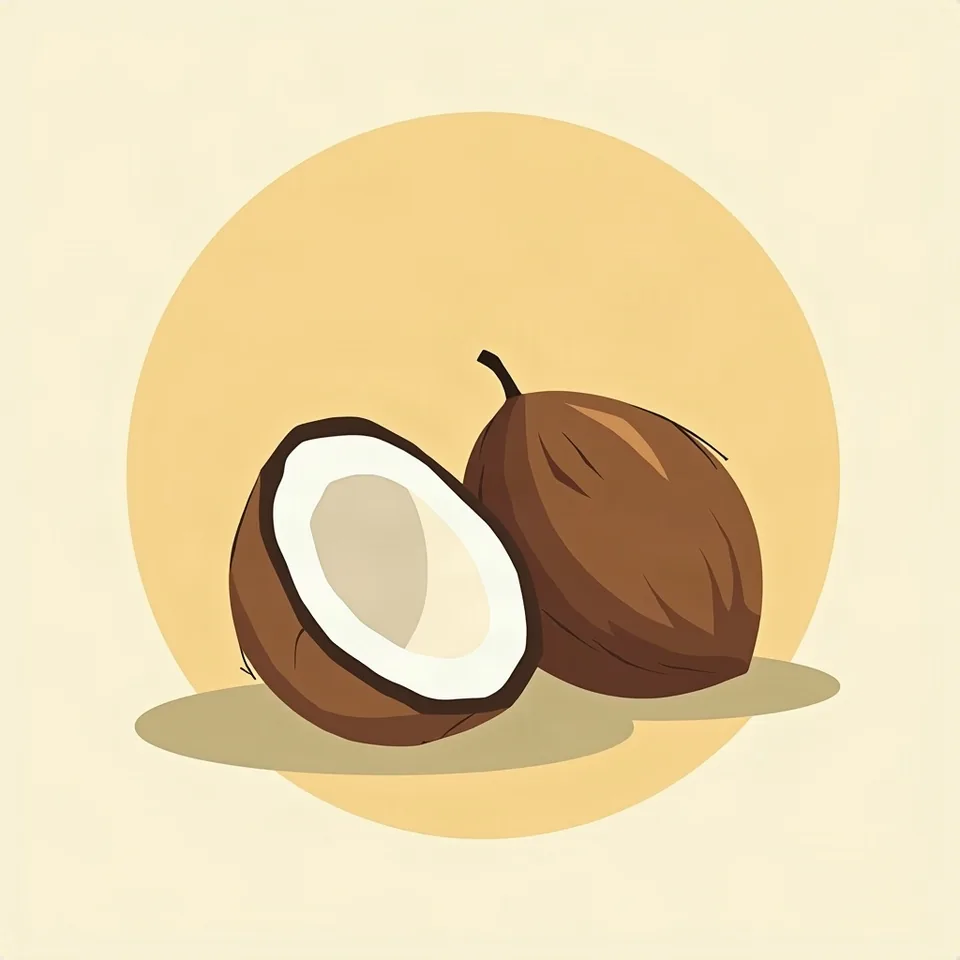
Fresh coconut isn't toxic to dogs, and a small amount of flesh makes a safe occasional treat. Its high fat content, though, means a risk of diarrhea or pancreatitis if overdone, and the hard shell is dangerous in its own right. Here's how to serve coconut safely.
Why only in moderation
Fresh coconut flesh contains no substances that are toxic to dogs. It contains medium-chain triglycerides (MCTs) and fiber, though claims about benefits for coat or digestion are more unproven folklore than solid scientific evidence; it's certainly not a miracle superfood.
The main risk is the high fat content. Even a small extra amount can cause diarrhea or bloating in more sensitive dogs, and in predisposed breeds a larger amount raises the risk of pancreatitis, a painful and potentially serious condition that requires veterinary care.
The hard shell is dangerous; it can injure the mouth, damage teeth, or cause a blockage if a dog swallows a large piece. Always serve coconut only as peeled flesh with no trace of shell or tough skin, cut into small pieces.
Coconut oil has been heavily promoted in recent years as a supplement for coat or digestion, but the scientific evidence is weak, and it's pure fat with a high calorie count. Store-bought desiccated coconut is often sweetened with sugar too, so it's not suitable for dogs even in small amounts.
How to serve coconut
- Give only a small piece of fresh coconut flesh with no shell and no skin.
- Skip desiccated coconut with added sugar or syrup.
- Use coconut oil only occasionally and in a minimal amount, ideally after checking with your vet.
- Introduce it gradually and watch your dog's stool; coconut can cause diarrhea in sensitive dogs.
Rough portion
Small dog: a small piece once a week. Medium and large dog: a couple of small pieces once or twice a week at most, no more often because of the high fat content.
Risks
- The high fat content can trigger diarrhea or pancreatitis if overdone.
- The hard shell can injure the mouth or cause a blockage in the gut.
- Store-bought desiccated coconut is often sweetened with sugar or treated with sulfites.
- Coconut water in large amounts strains the kidneys because of its high potassium content.
Symptoms to watch for
- Diarrhea or loose stool
- Vomiting after a larger amount
- Bloating and abdominal pain
- Loss of appetite with pancreatitis (rare)
Your dog already ate coconut. What now?
- A small piece of fresh coconut with no shell usually needs no action; just watch your dog's stool.
- If your dog swallowed a piece of hard shell, watch to make sure they're passing stool normally, not vomiting, and don't have a painful abdomen, and contact your vet if concerned.
- If your dog consumes a large amount of coconut oil at once, watch for signs of pancreatitis: repeated vomiting, abdominal pain, and loss of appetite.
Common questions about dogs and coconut
Is coconut oil good for dogs?
Convincing scientific evidence of a real benefit for coat or digestion is lacking. It's pure fat with a high calorie count, so even if there were a small effect, the risk of weight gain or digestive upset with regular feeding outweighs it. Use it sparingly, if at all, and ideally after talking with your vet.
Can dogs eat coconut shell?
No. The hard shell is dangerous for dogs; it can injure the mouth, damage teeth, or cause a blockage in the gut. Always serve coconut as plain flesh with no shell or skin, ideally cut into pieces sized for your dog.
Can I give my dog desiccated coconut from the store?
It's not recommended. Store-bought desiccated coconut is often sweetened with sugar or contains sulfites as a preservative, so it's not a good choice. A small piece of fresh, unsweetened coconut flesh with no shell is a safer option, or skip coconut altogether.
Does coconut help against parasites in dogs?
There's a common folk belief about this, but reliable scientific evidence is lacking, and coconut is in no way a substitute for standard deworming treatment prescribed by a vet. Relying on coconut as parasite prevention is risky.
Other good treats

Can dogs eat apples?
Yes, dogs can eat apples. The flesh is safe, full of fiber and vitamin C, and even gives teeth a light mechanical clean. Always remove the core and seeds, though, and don't feed large pieces at once.

Can dogs eat bananas?
Yes, dogs can eat banana, but only as an occasional treat. It's safe and dogs tend to love it, but it's high in sugar. A small dog only needs 2 to 3 slices, a large dog about half a banana.
Can dogs eat blueberries?
Yes, blueberries are one of the healthiest fruits for dogs. They're small, low in calories, and packed with antioxidants, which is why they're often recommended as a training treat or a snack for older dogs.

Can dogs eat peanut butter?
Yes, peanut butter without xylitol, added sugar, or salt is a popular, safe treat for dogs in small amounts. Always check the label carefully, since some “light” or high-protein versions contain xylitol, which is deadly to dogs.
More from nuts and seeds
Can dogs eat almonds?
No, almonds aren't recommended for dogs. They're not toxic the way macadamia nuts are, but dogs digest them poorly, a whole nut poses a choking risk, and the high fat content can trigger pancreatitis.
Can dogs eat cashews?
Yes, dogs can eat cashews, but only raw, unsalted ones and in small amounts. Cashews are high in fat, so larger portions can cause digestive upset or contribute to pancreatitis.
Can dogs eat macadamia nuts?
No, macadamia nuts are toxic to dogs. As little as 6 nuts for a 22 lb dog can cause weakness, tremors, and fever, so your dog should never get even one.
Sources
Last updated 2 September 2026.