Medium breed
English Bulldog: feeding, nutrition and health
The English Bulldog is a brachycephalic breed with low exercise tolerance, a strong tendency toward obesity, and a sensitive digestive system. Feeding this breed has to account for breathing and eating difficulties, a tendency toward gas, and frequent skin allergies. Here's how.
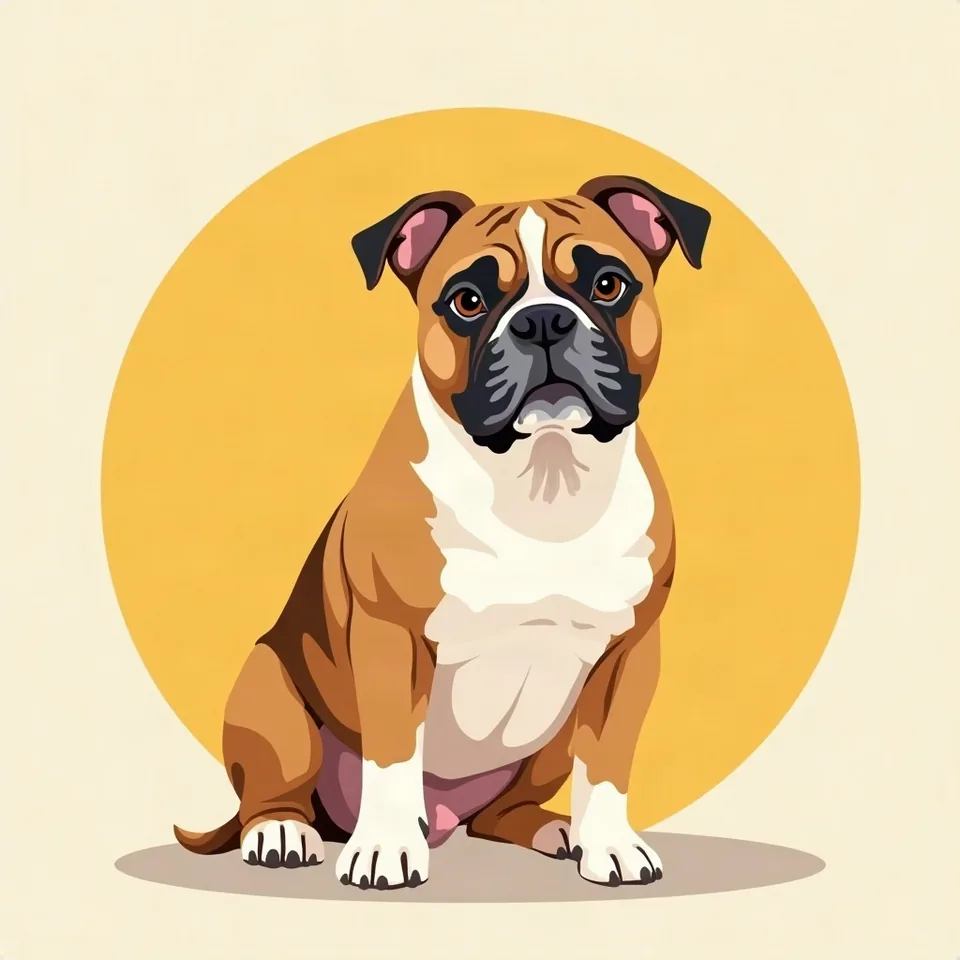
- Weight
- 18–25 kg40–55 lb
- Height
- 31–40 cm12–16 in
- Lifespan
- 8–10 yrs
- Size
- Medium
- Activity
- Very low
- Adult at
- 12 months
- Senior from
- 6 yrs
- FCI group
- 2
How much food does a English Bulldog need?
The calculator starts at the breed average of 21.5 kg (47 lb). Put in your own dog's weight and the energy figure from the bag.
On the bag this is the metabolisable energy (ME). If it is given per kg, divide by 10. If it is in kJ, divide by 4.184.
Daily portion
— g
— oz · range — g
Per meal
— g
2 meals a day
Energy
— kcal
resting need — kcal
Usage: — kg a month (a 12 kg bag lasts about — days)
Cost: — a month
The full explanation of the maths is on the food portion calculator.
Feeding a English Bulldog: what matters
Because of its low activity level and limited exercise tolerance, the English Bulldog has notably lower energy needs than its weight would suggest for a more active breed. A food with controlled energy density and a precisely measured ration is the basic requirement for preventing obesity.
Given its tendency to gulp food and swallow air, it's worth slowing a Bulldog's eating pace with a specialty bowl or by splitting its portion into several smaller meals. This also reduces the gas and bloating this breed commonly suffers from.
Given how often this breed has sensitive skin, a food with a clearly declared, limited number of protein sources and plenty of omega-3 fatty acids to support the skin in its folds is helpful. For persistent skin problems, it's worth discussing an elimination diet with your vet.
Protein in the food
22–28 %
dry matter, mostly animal
Fat in the food
10–14 %
dry matter, by activity
What to watch for
- Low tolerance for exertion and heat limits how many calories can be burned through exercise, which makes portion control essential.
- Gulping food and swallowing air worsen gas and the risk of choking, so use slow-feed bowls.
- Skin allergies often flare up in the folds; watch for a link to specific foods or treats.
- Don't combine feeding with vigorous exercise in hot weather; overheating risk is high in a brachycephalic breed.
Practical feeding tips
- Always weigh the daily ration on a kitchen scale; a Bulldog gains weight easily even from small calorie surpluses.
- Use a slow-feed bowl or split the portion into several smaller meals, which limits both gas and the risk of choking.
- Keep your dog quiet after meals, with no vigorous activity, especially in hot weather.
- For persistent skin problems, talk to your vet about a food with a limited number of protein sources.
- A neutered dog needs 20 to 30 percent less energy than an intact one, so reduce the ration accordingly after neutering.
Feeding schedule by age
| Stage | Meals a day | Note |
|---|---|---|
| Puppy 8 to 12 weeks | 4x | A medium-breed puppy food, fed in small, frequent portions. |
| Puppy 3 to 6 months | 3x | Monitor body condition; a Bulldog should stay lean even while growing. |
| Junior 6 to 12 months | 2x | Gradual transition to an adult food, with weight monitored. |
| Adult 12 months to 6 years | 2x | Precisely measured portions, a slow-feed bowl, and obesity prevention. |
| Senior from 6 years | 2x | Lower energy, joint support, and easily digestible protein. |
Health risks that diet affects
Brachycephalic obstructive airway syndrome (BOAS)
A shortened skull and narrowed airways make breathing difficult for Bulldogs, which shows up at mealtimes too, in rushed gulping of large mouthfuls and swallowed air. Slow-feed bowls, smaller portions, and quiet time after eating lower the risk of choking and regurgitation, especially in warm weather.
Obesity
Low activity, limited exercise tolerance, and a healthy appetite make the Bulldog one of the breeds at highest risk of excess weight. Because exercise as a weight-loss tool is limited by its breathing, controlling food portions is essential and needs to be stricter than for more active breeds.
Allergies and food sensitivity
Bulldogs have an elevated rate of skin allergies, which often flare up in the skin folds. A food component is significant for some dogs, and a food with a limited number of clearly declared protein sources can ease symptoms, though diagnosis should be led by a vet.
Gas
The combination of gulping food, swallowing air, and a sensitive digestive system makes Bulldogs gassier, and more often so, than other breeds. Slowing down mealtime and choosing a food made with highly digestible, quality ingredients helps limit the problem.
Hip dysplasia
Despite its smaller size, the Bulldog's sturdy build makes it prone to hip dysplasia. Controlling weight during growth and adulthood reduces mechanical strain on the joints and eases symptoms.
Temperament and exercise
The English Bulldog is a calm, low-energy dog that's happy to rest for long stretches and has little need for intense exercise. That low energy expenditure means even the standard feeding amount on a food's label can easily lead to weight gain.
Its shortened muzzle and narrowed airways make it hard for a Bulldog to regulate body temperature, and it copes poorly with both exertion and heat. That further limits how many extra calories it can burn through activity, which makes portion control essentially the only effective tool against weight gain in this breed.
Bulldogs often bolt their food and swallow air while eating, which combined with a sensitive digestive system leads to bloating and gas. Slowing down mealtime with a specialty bowl is often more than just a comfort measure for this breed.
Coat: Short, smooth, fine coat lying close to the body; low-maintenance, though the skin folds need regular cleaning.
Common questions about feeding a English Bulldog
How much should an English Bulldog weigh?
The standard lists a target weight of about 25 kg (55 lb) for males and 23 kg (51 lb) for females, though in practice the range commonly seen is 18 to 25 kg (40 to 55 lb). Because of the breed's low activity level, checking condition by feeling the ribs matters more than watching the number on the scale.
How much food does an English Bulldog need per day?
For a 22 kg (49 lb) dog, that's roughly 220 to 280 g of a quality kibble a day, split into two meals, less than a more active breed of similar weight would need. The exact amount depends on the food's energy content, so use the calculator above for a precise figure.
What is the best food for an English Bulldog?
A food with controlled, on the lower side, energy density, quality protein, and highly digestible ingredients that limit gas works well. For dogs with skin problems, a food with a limited number of clearly declared protein sources helps.
Why do Bulldogs have such strong gas?
The combination of gulping food, swallowing air through a shortened airway, and a sensitive digestive system makes Bulldogs gassier than other breeds. A slower eating pace, smaller portions, and a quality, easily digestible food all help.
How long do English Bulldogs live?
Average lifespan is 8 to 10 years, shorter than many other breeds of similar size because of brachycephalic and joint problems. Keeping the dog lean is one of the few factors an owner can realistically influence through diet.
Why does a Bulldog gain weight so easily?
Low activity and poor tolerance for heat and exertion severely limit calorie burning through exercise, so even a standard feeding amount from the label tends to be too much for this breed. Portion control and regular weigh-ins are therefore essential for a Bulldog.
Does a Bulldog need a special feeding bowl?
A slow-feed bowl or one with built-in obstacles isn't strictly necessary, but it helps a great deal for Bulldogs that gulp their food. It slows the pace of eating and reduces both swallowed air and the resulting gas and choking risk.
Breeds of a similar size
Australian Shepherd
Medium · 16–32 kg · 12–15 years
The Australian Shepherd is a working herding dog with enormous exercise and calorie needs, but also a breed with a well-known genetic sensitivity to certain drugs. Here's how to feed an Aussie according to its actual energy output, and what to watch for with the MDR1 gene mutation and a tendency toward epilepsy.
Basset Hound
Medium · 20–29 kg · 10–12 years
The Basset Hound is a low-slung, heavy dog with minimal natural drive to move, and even mild excess weight puts serious strain on its long back and joints. Here's how much a Basset should weigh, why portion control matters more for this breed than almost any other, and how to lower the risk of a slipped disc.
Belgian Malinois
Medium · 20–30 kg · 12–14 years
The Belgian Malinois is a working breed with extremely high energy needs and a digestive system that's sensitive to stress. Here's how much energy an active versus a companion Malinois actually needs, how to prevent bloat, and why a poorly judged ration hurts both performance and health in this breed.
Border Collie
Medium · 12–22 kg · 12–15 years
The Border Collie is the most hardworking herding breed, with energy needs that can differ by tens of percent depending on lifestyle. Here's how to portion food according to actual workload, what to watch for with drug sensitivity (MDR1), and how to support the joints of dogs active in sport.
Sources
- FCI standard no. 149: English Bulldog
- WSAVA Global Nutrition Committee: Global Nutrition Guidelines
Last updated 2 September 2026.