Medium breed
Belgian Malinois: feeding, nutrition and health
The Belgian Malinois is a working breed with extremely high energy needs and a digestive system that's sensitive to stress. Here's how much energy an active versus a companion Malinois actually needs, how to prevent bloat, and why a poorly judged ration hurts both performance and health in this breed.
- Weight
- 20–30 kg44–66 lb
- Height
- 56–66 cm22–26 in
- Lifespan
- 12–14 yrs
- Size
- Medium
- Activity
- Very high
- Adult at
- 15 months
- Senior from
- 8 yrs
- FCI group
- 1
How much food does a Belgian Malinois need?
The calculator starts at the breed average of 25 kg (55 lb). Put in your own dog's weight and the energy figure from the bag.
On the bag this is the metabolisable energy (ME). If it is given per kg, divide by 10. If it is in kJ, divide by 4.184.
Daily portion
— g
— oz · range — g
Per meal
— g
2 meals a day
Energy
— kcal
resting need — kcal
Usage: — kg a month (a 12 kg bag lasts about — days)
Cost: — a month
The full explanation of the maths is on the food portion calculator.
Feeding a Belgian Malinois: what matters
A Malinois needs a food with higher energy density and more quality animal protein than most breeds of similar weight, but only if actual workload justifies it. An actively working or heavily exercised dog can handle a working/active-dog food, while a companion Malinois on regular walks needs substantially less energy than its muscular, athletic build would suggest.
Given its sensitivity to stress, consistency pays off for this breed: the same food, the same feeding time, a calm environment at the bowl. Sudden diet changes or feeding in a stressful setting, right after training or while traveling, raise the risk of digestive upset more than in calmer breeds.
Recovery after physical exertion is critical for working dogs. A food with plenty of quality protein and fatty acids supports muscle recovery and lowers the risk of overuse injury to a musculoskeletal system that's under constant load in this extremely active breed.
Protein in the food
28–32 %
dry matter, mostly animal
Fat in the food
15–20 %
dry matter, by activity
What to watch for
- Feeding by a generic chart without regard to actual workload is a mistake; the gap between a working dog and a companion is enormous in this breed.
- Feeding right before or after intense training raises the risk of both bloat and digestive upset.
- A sudden change of food or environment is hard on a stress-sensitive dog; make changes gradually and calmly.
- A sharp drop in energy expenditure after retirement from working duty, without a matching cut to the ration, is a common trigger for weight gain.
Practical feeding tips
- Estimate energy needs from actual workload, not from the breed alone; the difference can be as much as double.
- Feed twice a day, not right before or after intense training.
- In stressful situations, such as shows, travel, or training camps, consider an easily digestible food.
- For puppies, choose a food with controlled energy density for slower, more even joint growth.
- After retirement from working duty or after neutering, cut the ration right away, not after weight gain becomes visible.
Feeding schedule by age
| Stage | Meals a day | Note |
|---|---|---|
| Puppy 8 to 12 weeks | 4x | A medium- to large-breed puppy food with controlled energy content. |
| Puppy 3 to 6 months | 3x | Slow, steady growth matters more for the joints than rapid weight gain. |
| Junior 6 to 15 months | 2x | Training workload increases gradually; adjust the ration to match actual activity. |
| Adult 15 months to 8 years | 2x | A higher-energy food for working dogs, a more moderate one for companions. |
| Senior from 8 years | 2x | Lower energy density, joint support, and weight monitoring after working duty ends. |
Health risks that diet affects
High energy needs and risk of misjudging the ration
A working Malinois can need as much as double the energy of a companion dog of the same weight. Feeding according to a generic chart, without regard to actual workload, leads either to weight loss and reduced performance, or, in less active dogs, to excess weight.
Hip and elbow dysplasia
These inherited joint defects are made worse by rapid growth and excess weight during puppyhood. Puppies should get a medium- to large-breed food with controlled energy and calcium content, not a high-energy puppy food designed for rapid weight gain.
Idiopathic epilepsy
Malinois have a reported elevated rate of seizure disorders with a genetic basis. Diet doesn't cause seizures, but for affected dogs a regular, consistent feeding routine without sudden swings helps, since fasting or severe stress can lower the seizure threshold.
Stress-related digestive upset
This highly alert, work-driven breed often responds to stress, from training, travel, or a change of environment, with digestive upset: diarrhea, vomiting, or a temporary loss of appetite. An easily digestible food and calm around mealtimes help shorten these episodes.
Bloat
This breed's deep chest means an elevated risk of bloat, especially after a large meal followed by intense activity. Feeding twice a day, resting after eating, and avoiding training right after a meal all lower the risk.
Temperament and exercise
The Malinois is the highest-drive and most energy-demanding of the Belgian Shepherd varieties. Without enough physical and mental work, it quickly becomes anxious, destructive, and overly alert. Energy needs can differ by tens of percent between a working dog and a companion of the same breed.
The breed is extremely sensitive to stress, and that shows up directly in digestion. A Malinois under tension, at a show, or during training readily responds with diarrhea, vomiting, or refusing food. The feeding routine therefore needs to build in calm around mealtimes, not just the right food composition.
Retirement from working duty, in police or search-and-rescue dogs, brings a real risk of rapid weight gain, because energy expenditure drops sharply while the habit of a large portion remains. The ration needs to come down the moment activity drops, not after weight gain becomes visible.
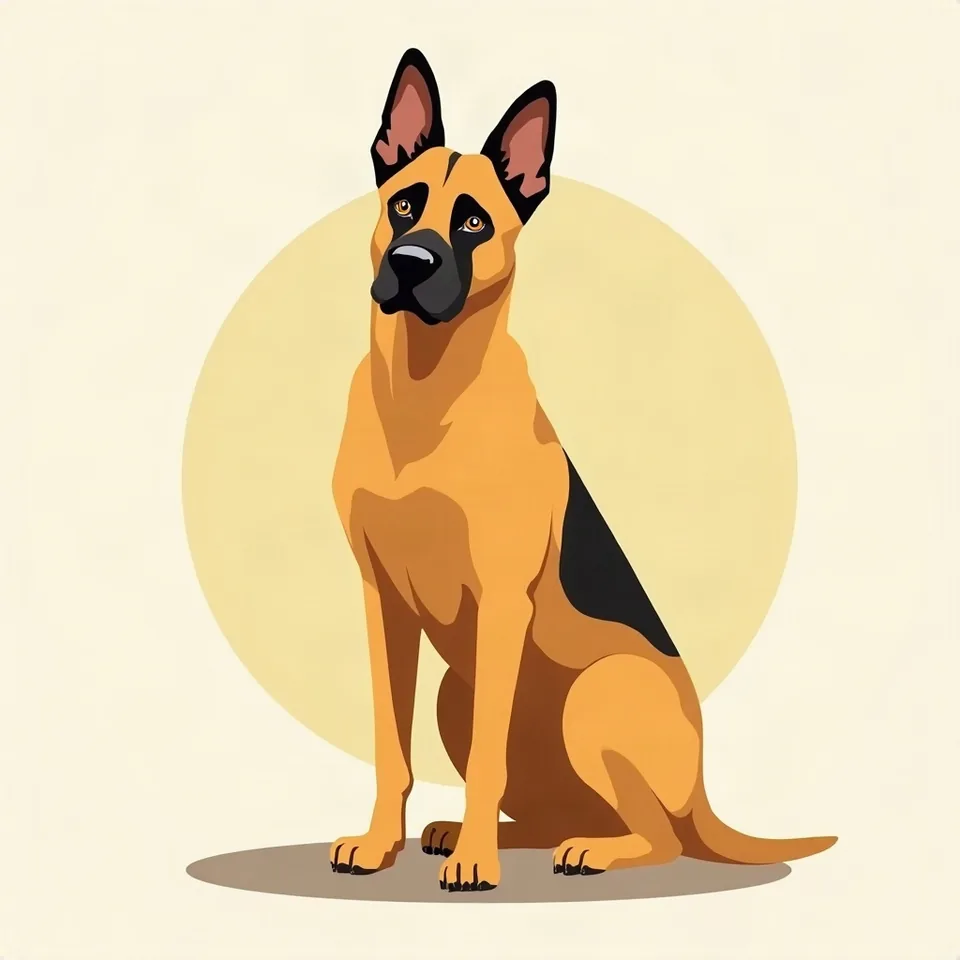
Coat: Short, dense, harsh coat in fawn to mahogany with black masking; sheds year-round, more heavily twice a year.
Common questions about feeding a Belgian Malinois
How much should a Belgian Malinois weigh?
Under the FCI standard, adult males typically weigh 25 to 30 kg (55 to 66 lb) and females 20 to 25 kg (44 to 55 lb), standing 58 to 66 cm and 56 to 61 cm at the shoulder respectively. Given the athletic, muscular build, condition and a visible waist matter more than the exact number on the scale.
How much food does a Malinois need per day?
An adult Malinois weighing 25 kg (55 lb) with average companion-level activity needs roughly 1,100 to 1,300 kcal a day, which works out to about 280 to 330 g of a higher-energy kibble (400 kcal/100 g). A working dog can need considerably more; energy needs must be derived from actual workload, not from the breed alone.
What is the best food for a Malinois?
A Malinois that's actively working or in sport can handle a working/active-dog food with higher protein (28 to 32 percent) and fat (15 to 20 percent). A companion Malinois on regular walks should get a food with lower energy density, even though it looks just as athletic.
How long do Belgian Malinois live?
Malinois typically live 12 to 14 years. Correctly judging energy needs during an active working life, and cutting them back promptly after retirement or neutering, has the biggest impact on both lifespan and quality of life.
Why does a Malinois have a sensitive stomach?
This highly alert, work-driven breed often responds to stress, from training, travel, or a change of environment, with digestive upset such as diarrhea or vomiting. A consistent feeding routine, calm at mealtimes, and avoiding feeding right before or after demanding activity all help.
Is bloat a risk for the Malinois?
Yes. This breed's deep chest means an elevated risk of bloat, especially after a large meal followed by intense activity. Feeding twice a day, resting after eating, and avoiding training right after a meal all lower the risk.
Breeds of a similar size
Australian Shepherd
Medium · 16–32 kg · 12–15 years
The Australian Shepherd is a working herding dog with enormous exercise and calorie needs, but also a breed with a well-known genetic sensitivity to certain drugs. Here's how to feed an Aussie according to its actual energy output, and what to watch for with the MDR1 gene mutation and a tendency toward epilepsy.

Basset Hound
Medium · 20–29 kg · 10–12 years
The Basset Hound is a low-slung, heavy dog with minimal natural drive to move, and even mild excess weight puts serious strain on its long back and joints. Here's how much a Basset should weigh, why portion control matters more for this breed than almost any other, and how to lower the risk of a slipped disc.
Border Collie
Medium · 12–22 kg · 12–15 years
The Border Collie is the most hardworking herding breed, with energy needs that can differ by tens of percent depending on lifestyle. Here's how to portion food according to actual workload, what to watch for with drug sensitivity (MDR1), and how to support the joints of dogs active in sport.

English Bulldog
Medium · 18–25 kg · 8–10 years
The English Bulldog is a brachycephalic breed with low exercise tolerance, a strong tendency toward obesity, and a sensitive digestive system. Feeding this breed has to account for breathing and eating difficulties, a tendency toward gas, and frequent skin allergies. Here's how.
Sources
- FCI standard no. 15: Belgian Shepherd Dog (Malinois)
- WSAVA Global Nutrition Committee: Global Nutrition Guidelines
Last updated 2 September 2026.