Can dogs eat camembert?
Short answer
Yes, a dog can eat a small piece of camembert, but only as an occasional treat. It's high in fat and salt, so larger amounts can cause digestive upset or stress the pancreas.
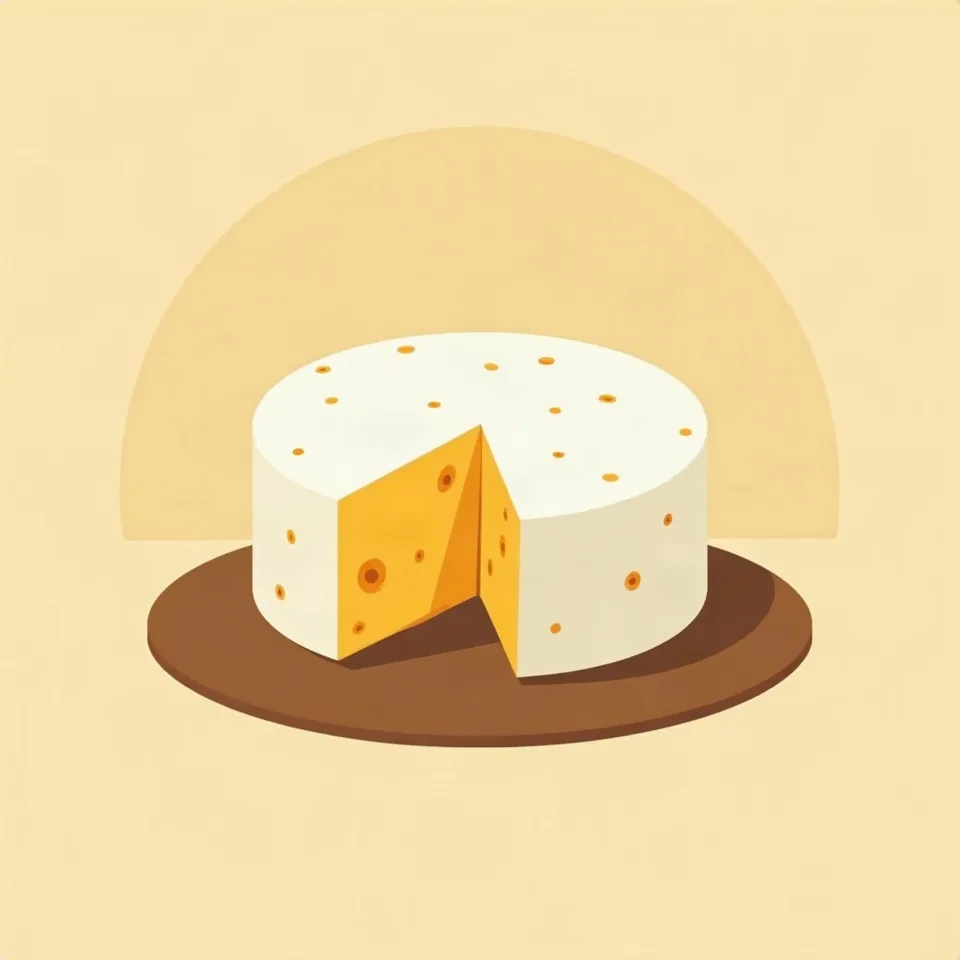
Camembert is a soft, bloomy-rind cheese that won't poison a dog outright, but its high fat and sodium content mean it doesn't belong in a regular diet. Here's how much is still safe and why the rind and bigger portions are a bad idea.
Why only in moderation
Camembert is known for its high fat content (typically 20-25% fat by weight, more once you account for moisture) and the salt used during aging and surface treatment. Dog digestion doesn't handle sudden fat spikes well, and this can trigger diarrhea or, in predisposed breeds, acute pancreatitis.
The white rind (Penicillium camemberti mold) isn't toxic to dogs on its own, but in larger amounts it can irritate the digestive tract and cause vomiting or diarrhea in sensitive dogs. It's safer to skip the rind entirely and offer only the soft interior.
Many dogs also have reduced ability to digest lactose, since lactase enzyme activity drops with age. Aged cheeses like camembert have less lactose than milk, but not zero, so even a small piece can cause bloating or loose stool in sensitive dogs.
High sodium content is especially a concern for dogs with heart disease, kidney disease, or a tendency toward pancreatitis. For a healthy dog with no underlying conditions, an occasional small piece without the rind is fine, but regular feeding is not.
How to serve camembert
- Offer only a small piece of the soft interior, without the white rind.
- Serve camembert cold and fresh, not melted or baked into a rich dish.
- Never give camembert paired with onion, garlic, or seasoned spreads that often show up on cheese boards.
- Treat camembert as a rare treat, not a regular part of your dog's diet.
- After the first try, watch your dog's stool and behavior — skip the cheese entirely if you notice any issues.
Rough portion
Small dog (under 22 lb): one piece about the size of a sugar cube (roughly 4g/0.15oz), once in a while. Medium dog (22-55 lb): 1-2 small cubes (roughly 8g/0.3oz). Large dog (over 55 lb): 2-3 small cubes (roughly 12g/0.4oz). No more than once a week, and always remove the rind.
Risks
- High fat content can trigger acute pancreatitis in sensitive dogs, especially with repeated feeding.
- High salt content strains the kidneys and heart, particularly risky for older dogs or those with chronic conditions.
- Lactose intolerance can cause bloating, gas, or diarrhea.
- The moldy rind in larger amounts can irritate the digestive tract and cause vomiting.
Symptoms to watch for
- Vomiting
- Diarrhea or loose stool
- Bloating and gas
- Painful or tense belly (possible sign of pancreatitis)
- Loss of appetite, lethargy
- Increased water drinking due to high salt intake
Your dog already ate camembert. What now?
- If your dog ate just a small piece, monitor at home — usually no intervention is needed.
- If a large amount of camembert was eaten at once, watch for 24-48 hours for signs of pancreatitis like abdominal pain, vomiting, or lethargy.
- If you see repeated vomiting, severe abdominal pain, or your dog refuses food for more than a day, contact your veterinarian.
Common questions about dogs and camembert
Can a dog eat camembert with the rind on?
It's not ideal. The white rind itself isn't toxic, but in larger amounts it can irritate the digestive tract and cause vomiting or diarrhea. It's safer to give your dog only the soft interior without the rind.
How much camembert can a dog eat?
A small dog should get at most a piece the size of a sugar cube, and a large dog two to three small cubes, and only occasionally, not regularly. Because of the high fat and salt content, camembert shouldn't be a regular part of the diet.
Can a puppy eat camembert?
Better not to. Puppies have more sensitive digestion, and the high fat content in camembert can easily trigger diarrhea or stomach pain. If you want to give a puppy a dairy treat, plain unflavored yogurt or cottage cheese is a safer choice.
Is camembert worse for dogs than other cheeses?
Compared to hard cheeses, camembert usually has a higher fat content and is freshly salted on the surface too, so it puts more strain on digestion and the pancreas. Overall, lower-fat, lower-sodium cheeses are a better choice for dogs, and even those only in small amounts.
Other good treats
Can dogs eat cottage cheese?
Yes, cottage cheese is one of the most easily digested dairy products for dogs. It's low in lactose and high in protein. Even so, it should stay an occasional addition to the diet, not a regular part of it.
Can dogs eat cheese?
Yes, cheese can be an occasional reward for dogs, ideally a hard, lower-fat variety in small amounts. Because of its fat, salt, and lactose content, though, it should not be a regular part of the diet.

Can dogs eat kefir?
Yes, plain kefir is low in lactose and rich in probiotic cultures, making it easy for most dogs to digest. In small amounts, it can even be given fairly regularly as a dietary supplement.
Can dogs eat yogurt?
Yes, plain yogurt with no added sugar or flavoring can be given to dogs in small amounts as a source of probiotics and calcium, but because of the lactose and the risk of xylitol in flavored versions, keep it occasional and always plain.
More from dairy
Can dogs eat butter?
No, butter isn't recommended for dogs. It's almost pure fat with no useful nutrients to speak of, and even a small amount can cause digestive upset or contribute to pancreatitis in sensitive dogs.

Can dogs eat cream?
No, cream is not recommended for dogs. Like butter, it is a very high-fat dairy product that easily causes digestive upset and raises the risk of pancreatitis.

Can dogs eat milk?
No, cow's milk isn't recommended for adult dogs. Most are at least somewhat lactose intolerant, and milk often causes diarrhea and bloating without offering any nutritional benefit that couldn't be gotten elsewhere.
Sources
- Merck Veterinary Manual: Food Hazards
- ASPCA Animal Poison Control: People foods to avoid feeding your pets
- WSAVA Global Nutrition Guidelines
Last updated 10 September 2026.