Small breed
Pug: feeding, nutrition and health
The Pug is one of the breeds most prone to obesity of all: a compact body, a brachycephalic muzzle, and an endless appetite are a combination that feeding has to actively manage. Here's how to feed a Pug without piling on unnecessary weight, with an eye on breathing and skin health too.
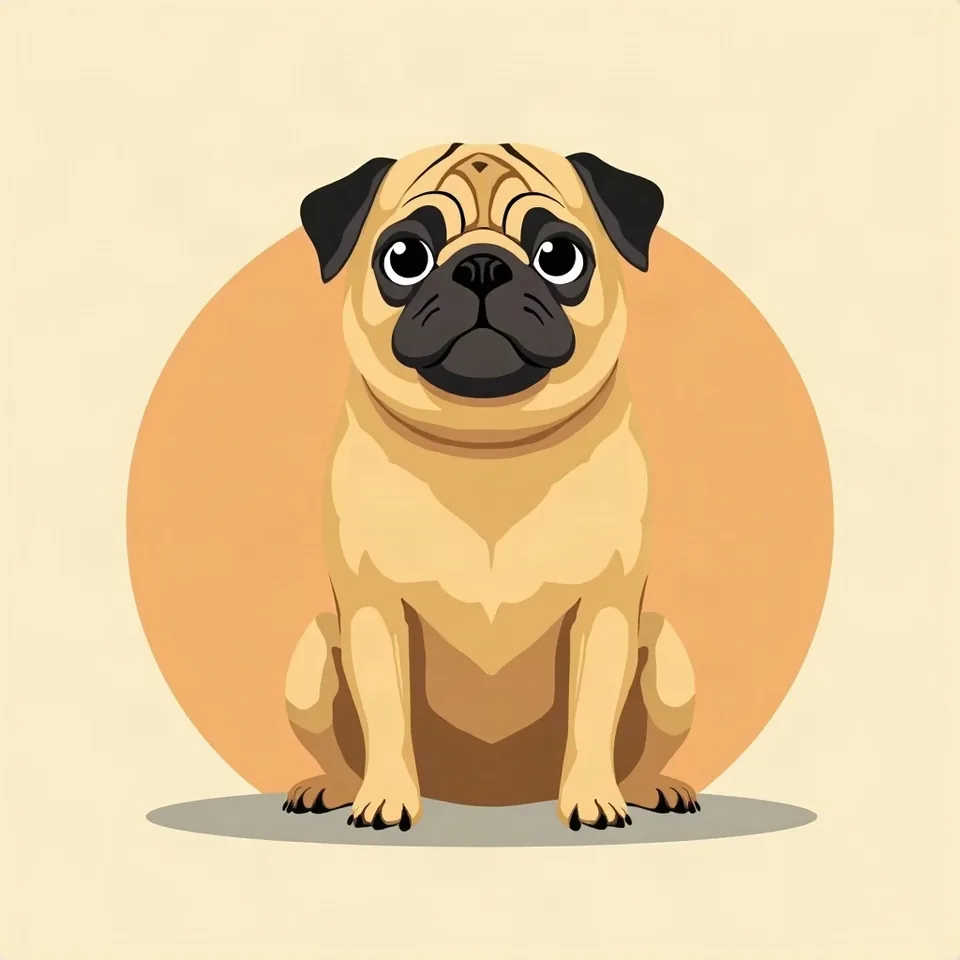
- Weight
- 6.3–8.1 kg14–18 lb
- Height
- 25–36 cm10–14 in
- Lifespan
- 12–15 yrs
- Size
- Small
- Activity
- Low
- Adult at
- 10 months
- Senior from
- 8 yrs
- FCI group
- 9
How much food does a Pug need?
The calculator starts at the breed average of 7.2 kg (16 lb). Put in your own dog's weight and the energy figure from the bag.
On the bag this is the metabolisable energy (ME). If it is given per kg, divide by 10. If it is in kJ, divide by 4.184.
Daily portion
— g
— oz · range — g
Per meal
— g
2 meals a day
Energy
— kcal
resting need — kcal
Usage: — kg a month (a 12 kg bag lasts about — days)
Cost: — a month
The full explanation of the maths is on the food portion calculator.
Feeding a Pug: what matters
Because of low activity and limited exercise tolerance, a Pug's energy needs are considerably lower than its compact, muscular build might suggest. A food with a controlled, relatively low energy density and precisely measured portions is the basic condition for preventing obesity, which affects this breed more than most others.
Because Pugs tend to gulp their food and swallow air, it's worth slowing down mealtime with a slow-feed bowl or by splitting the portion into more, smaller meals through the day. That lowers the risk of choking, vomiting, and bloating after eating.
Given how often Pugs deal with skin sensitivity and facial fold issues, a food with a clearly declared, limited number of protein sources and plenty of omega-3 fatty acids can help. For persistent skin problems, it's worth discussing an elimination diet with your vet.
Protein in the food
24–28 %
dry matter, mostly animal
Fat in the food
10–14 %
dry matter, by activity
What to watch for
- Extreme susceptibility to obesity: no begging at the table, no 'just a little extra' on top of meals.
- Gulping food and swallowing air raise the risk of choking, vomiting, and gas; use a slow-feed bowl.
- Low heat and exercise tolerance limits burning off calories through activity, so portion control is essential.
- Facial skin folds need hygiene, and it's worth watching whether skin problems track with the food.
Practical feeding tips
- Always weigh the daily ration on a kitchen scale; for a Pug, even a few extra grams a day matter.
- Use a slow-feed bowl or split the portion into more, smaller meals through the day.
- Keep the dog calm after eating, with no intense activity, especially in warm weather.
- Count treats toward the total daily ration; they easily make up a large share of a Pug's calorie intake.
- A neutered or spayed dog needs 20 to 30% less energy than an intact one, so cut the ration significantly after the procedure.
Feeding schedule by age
| Stage | Meals a day | Note |
|---|---|---|
| Puppy 8 to 12 weeks | 4x | Small-breed puppy food, small frequent portions. |
| Puppy 3 to 6 months | 3x | Monitor body condition; a Pug should stay lean even while growing. |
| Junior 6 to 10 months | 2-3x | Gradual switch to adult food, with weight monitoring. |
| Adult 10 months to 8 years | 2x | Precisely measured portions, a slow-feed bowl, strict obesity prevention. |
| Senior from 8 years | 2x | Lower energy, joint support, easily digestible protein. |
Health risks that diet affects
Obesity
The Pug has one of the highest documented rates of excess weight of any breed, driven by a combination of a big appetite, low activity, and limited exercise tolerance. Precisely measured portions and refusing to give in to begging are a necessity for this breed, not an optional extra.
Brachycephalic obstructive airway syndrome (BOAS)
A shortened skull and narrowed airway make both breathing and eating harder; Pugs often gulp food and swallow air. Slow-feed bowls, smaller portions, and rest after eating all reduce the risk of choking, vomiting, and overheating, especially in warm weather.
Pug dog encephalitis (PDE)
A rare but serious inflammatory brain disease specific to the breed, with a genetic basis. Diet can't prevent or treat it, but an overall balanced diet supports the immune system. Neurological signs such as seizures or disorientation need immediate veterinary care.
Allergies and skin problems
Pugs have an elevated rate of skin allergies, which often flare up in the facial skin folds. A food component is significant for some dogs, and a diet with a limited number of clearly declared protein sources can ease symptoms.
Temperament and exercise
The Pug is a sociable, cheerful dog famous for a huge appetite; begging at the table and hunting for food are typical behaviors. Without strict portion control, this is one of the breeds where weight gain happens fastest.
Low physical activity and a limited tolerance for heat and exertion, because of the shortened muzzle, further reduce the dog's ability to burn off a calorie surplus through exercise. That makes controlling the food ration practically the only effective tool against obesity in this breed.
A Pug eats fast and eagerly, which raises the risk of choking and vomiting after meals. Slowing down mealtime with a suitable bowl or splitting the ration into more portions helps this breed more than most.
Coat: A short, smooth, fine coat that nonetheless sheds fairly heavily year round.
Common questions about feeding a Pug
How much should a Pug weigh?
The FCI standard gives an ideal weight of 6.3 to 8.1 kg (13.9 to 17.9 lb) for both sexes. A Pug is compact and muscular, but ribs should still be easy to feel under a thin layer of fat; excess weight is both very easy to spot and very easy to gain in this breed.
How much food does a Pug need per day?
For a dog weighing 7 kg (15.4 lb), that's typically around 70 to 100 g (2.5 to 3.5 oz) of quality kibble a day, split into two meals. The exact amount depends on the food's energy value, and needs especially careful tracking in this breed, so use the calculator above.
What's the best food for a Pug?
Look for a food with a controlled, relatively low energy density, quality protein, and small kibble. For dogs with skin problems, a food with a limited number of clearly declared protein sources and plenty of omega-3 fatty acids can help.
Why does a Pug gain weight so easily?
A combination of a huge appetite, low activity, and limited exercise tolerance from the shortened muzzle makes the Pug one of the breeds most prone to obesity of all. Portion control and refusing to give in to begging are essential, since burning off extra weight through exercise is hard for this breed.
How long do Pugs live?
Average lifespan is 12 to 15 years. Keeping a lean body condition is one of the most important factors for this breed, since excess weight adds further strain to already limited breathing and to the joints.
Why does a Pug snort and wheeze even while eating?
This is a typical sign of brachycephalic syndrome caused by a shortened skull and narrowed airway. Gulping food makes it worse and raises the risk of choking or vomiting. A slow-feed bowl and smaller portions can ease symptoms; serious breathing problems need a vet's attention.
Breeds of a similar size
Beagle
Small · 9–11 kg · 12–15 years
The Beagle is a scent-obsessed hound that will eat practically anything it finds, which makes it one of the breeds most prone to excess weight. Here's how precise portioning and smart feeding can prevent the obesity that shortens a Beagle's active life more than anything else.
Cavalier King Charles Spaniel
Small · 5.4–8 kg · 9–14 years
The Cavalier King Charles Spaniel is a small, affectionate breed with an unusually high risk of heart valve disease, a condition that excess weight directly worsens. Here's how precise feeding keeps a Cavalier lean and eases the strain on both its heart and a skull prone to syringomyelia.
Dachshund
Small · 7–14 kg · 12–16 years
The Dachshund's long back carries a high risk of intervertebral disc disease, and even a little extra weight makes that risk dramatically worse. Here's how precise feeding keeps a Dachshund lean and protects its sensitive spine for life.
French Bulldog
Small · 8–14 kg · 9–11 years
The French Bulldog is a brachycephalic breed in which even mild overweight noticeably worsens breathing and adds strain to a spine already prone to disc herniation. Here's how precise portioning and an easily digestible food keep a French Bulldog lean and healthy.
Sources
- FCI standard no. 253: Pug
- WSAVA Global Nutrition Committee: Global Nutrition Guidelines
Last updated 2 September 2026.