Small breed
Beagle: feeding, nutrition and health
The Beagle is a scent-obsessed hound that will eat practically anything it finds, which makes it one of the breeds most prone to excess weight. Here's how precise portioning and smart feeding can prevent the obesity that shortens a Beagle's active life more than anything else.
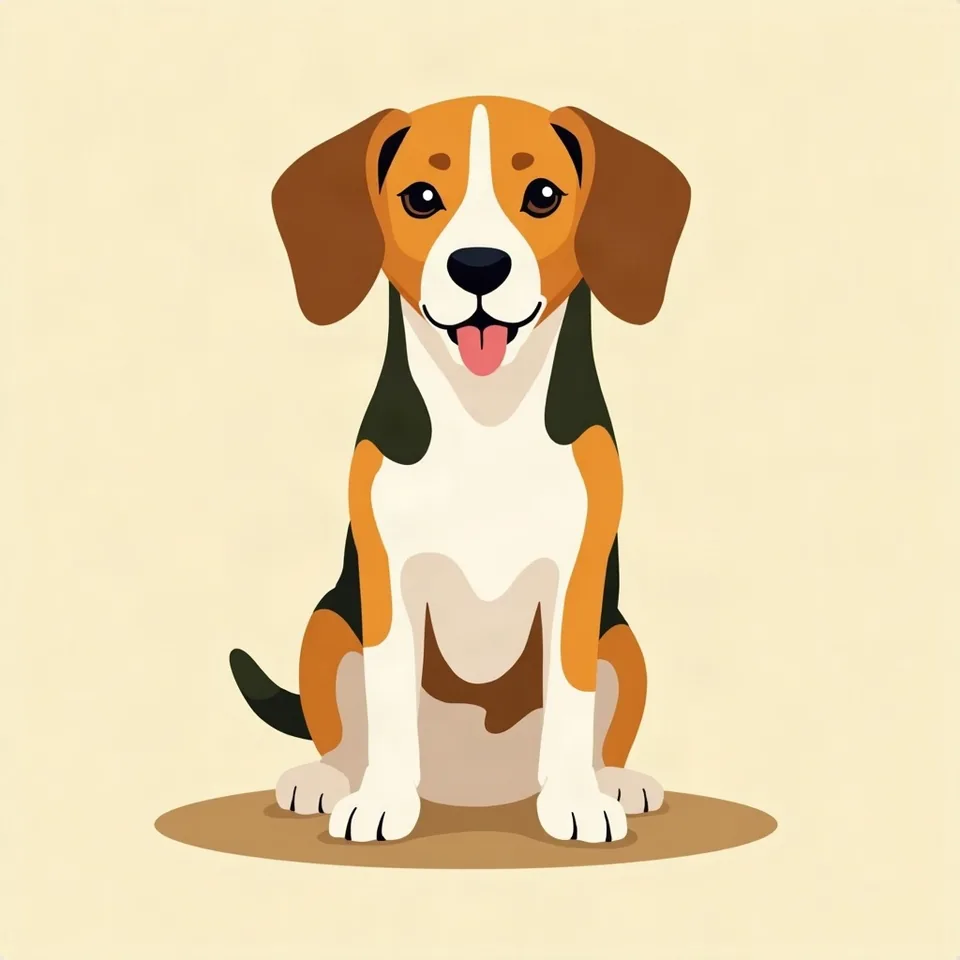
- Weight
- 9–11 kg20–24 lb
- Height
- 33–40 cm13–16 in
- Lifespan
- 12–15 yrs
- Size
- Small
- Activity
- High
- Adult at
- 12 months
- Senior from
- 8 yrs
- FCI group
- 6
How much food does a Beagle need?
The calculator starts at the breed average of 10 kg (22 lb). Put in your own dog's weight and the energy figure from the bag.
On the bag this is the metabolisable energy (ME). If it is given per kg, divide by 10. If it is in kJ, divide by 4.184.
Daily portion
— g
— oz · range — g
Per meal
— g
2 meals a day
Energy
— kcal
resting need — kcal
Usage: — kg a month (a 12 kg bag lasts about — days)
Cost: — a month
The full explanation of the maths is on the food portion calculator.
Feeding a Beagle: what matters
A Beagle needs a food with a reasonable energy density, and above all a strictly controlled daily ration, since its appetite bears almost no relation to its actual energy needs. A food higher in fiber helps deliver a feeling of fullness at a lower calorie count, which is often a more important trait for this breed than the specific protein source.
Given its strong food motivation, the Beagle is ideal for treat-based training, but for exactly that reason, rewards need to be consistently counted into the total daily ration. It works well to use part of the daily kibble ration itself as treats instead of adding extra calories on top.
Puzzle feeders and scent games that slow down eating and engage the nose help satisfy a Beagle's hunting instinct without increasing calorie intake. For this breed, nutritional care goes hand in hand with managing the environment: securing garbage and food out of the dog's reach.
Protein in the food
22–28 %
dry matter, mostly animal
Fat in the food
10–14 %
dry matter, by activity
What to watch for
- Excess weight is the most common and most serious dietary risk for a Beagle; weigh the dog regularly and adjust the ration right away.
- Training treats easily inflate calorie intake given the breed's strong food motivation, so count them into the daily ration.
- A tendency to eat found food and garbage means trash cans and food need to be kept out of reach.
- Unexplained weight gain on an unchanged ration can signal hypothyroidism and is worth a vet check.
Practical feeding tips
- Always weigh the daily ration on a kitchen scale, not with a scoop.
- Feed twice a day at set times and don't leave the bowl freely accessible.
- Use puzzle feeders and scent games to slow down eating and engage the nose.
- Replace treats with part of the daily kibble ration or with low-calorie vegetables.
- Check condition by feeling the ribs every 2 to 4 weeks; weight piles on quickly in a Beagle.
Feeding schedule by age
| Stage | Meals a day | Note |
|---|---|---|
| Puppy 8 to 12 weeks | 4x | A small- to medium-breed puppy food. |
| Puppy 3 to 6 months | 3x | Monitor body condition; a strong appetite tempts owners into overfeeding even at this age. |
| Junior 6 to 12 months | 2-3x | Gradual transition to an adult food, with the ration set by activity. |
| Adult 1 to 8 years | 2x | A precisely weighed ration; neutering calls for a reduction in energy. |
| Senior from 8 years | 2x | Lower energy, more fiber for fullness, and joint support. |
Health risks that diet affects
Obesity
The Beagle is among the breeds with the very highest rate of excess weight. The combination of a strong appetite, lower energy expenditure after neutering, and intense food motivation makes staying lean extremely challenging. Regular weigh-ins and precisely measured portions are essential for this breed.
Hypothyroidism
An underactive thyroid is more common than average in Beagles and shows up as weight gain, sluggishness, and a poorer coat even when the food ration hasn't changed. Unexplained weight gain calls for a veterinary hormone check.
Epilepsy
Idiopathic epilepsy is fairly common in the breed. Diet alone can't treat it, but a stable, regular feeding routine without swings supports the predictable schedule that works well for dogs on anti-seizure medication.
Tendency to eat inappropriate items
A strong nose and hunting drive lead Beagles to eat found food, garbage, and even inedible objects, raising the risk of digestive upset or, in severe cases, intestinal obstruction. A sufficiently filling food and supervision during outdoor time reduce the motivation to forage.
Pancreatitis
Inflammation of the pancreas is often triggered by fatty food or eating inappropriate scraps, something Beagles are prone to thanks to their nose. Consistently controlling access to garbage and fatty treats matters just as much as the composition of the regular food.
Temperament and exercise
A cheerful, sociable dog driven almost entirely by its nose, whose hunting instinct pushes it to search out its surroundings and eat practically anything it comes across. Controlling access to food outside the bowl matters more for a Beagle than for most other breeds.
Its high stamina for following a scent trail translates into a real need for exercise that owners often underestimate. A Beagle that hasn't burned off enough energy compensates for boredom by begging and foraging.
Strong food motivation makes the Beagle an excellent candidate for treat-based training, but also one of the riskiest breeds for overestimating daily calorie intake if rewards aren't counted into the total ration.
Coat: Short, dense, weatherproof coat lying close to the body; sheds lightly but consistently year-round.
Common questions about feeding a Beagle
How much should a Beagle weigh?
Commonly cited ranges put an adult Beagle at roughly 9 to 11 kg (20 to 24 lb), standing 33 to 40 cm at the shoulder. Given the breed's strong appetite, it's especially important to judge condition by feeling the ribs rather than going by the number on paper alone.
How much food does a Beagle need per day?
An adult Beagle weighing 10 kg (22 lb) with average activity needs roughly 500 to 600 kcal a day, which works out to about 145 to 170 g of a 350 kcal/100 g food, split into two meals. A neutered or less active dog needs less.
Why does a Beagle gain weight so easily?
The combination of a strong appetite, high food motivation, and lower energy expenditure after neutering makes the Beagle one of the breeds at the very highest risk of obesity. Precisely measuring the ration and limiting treats are therefore essential.
What food is suitable for a Beagle?
A food with reasonable energy density and higher fiber to provide fullness on fewer calories. Protein at 22 to 28 percent and fat at 10 to 14 percent on a dry matter basis is typically sufficient for a normally active Beagle.
How long do Beagles live?
On average, 12 to 15 years. Keeping the dog lean for life is by far the most effective way to extend an active, healthy old age for this breed, since excess weight is its single biggest health risk.
How do I stop a Beagle from eating things it finds outside?
A sufficiently filling food, a regular feeding routine, and training a solid "leave it" cue starting as a puppy all help. Given its strong nose and hunting drive, though, it's realistic to expect a Beagle to have a lifelong tendency to forage for food.
Breeds of a similar size
Cavalier King Charles Spaniel
Small · 5.4–8 kg · 9–14 years
The Cavalier King Charles Spaniel is a small, affectionate breed with an unusually high risk of heart valve disease, a condition that excess weight directly worsens. Here's how precise feeding keeps a Cavalier lean and eases the strain on both its heart and a skull prone to syringomyelia.
Dachshund
Small · 7–14 kg · 12–16 years
The Dachshund's long back carries a high risk of intervertebral disc disease, and even a little extra weight makes that risk dramatically worse. Here's how precise feeding keeps a Dachshund lean and protects its sensitive spine for life.

French Bulldog
Small · 8–14 kg · 9–11 years
The French Bulldog is a brachycephalic breed in which even mild overweight noticeably worsens breathing and adds strain to a spine already prone to disc herniation. Here's how precise portioning and an easily digestible food keep a French Bulldog lean and healthy.
Jack Russell Terrier
Small · 5–8 kg · 13–16 years
The Jack Russell Terrier is a small dog with the energy of a working hunting breed. It needs an energy-dense food that matches its output, or it quickly gains weight, or just as easily runs short on fuel. Here's how to feed this terrier and what to watch for with its teeth, joints, and eyes.
Sources
- FCI standard no. 161: Beagle
- WSAVA Global Nutrition Committee: Global Nutrition Guidelines
- Royal Veterinary College VetCompass: risk factors for canine obesity by breed
Last updated 2 September 2026.