Small breed
Poodle: feeding, nutrition and health
The Poodle comes in several recognized sizes, from Toy up to Standard, and this guide focuses mainly on the smaller varieties, Miniature and Toy, which are the most commonly kept. With a lean build and an intelligence that leads to quick boredom and stress eating, the Poodle needs precisely measured meals and watchfulness for an inherited adrenal disease and skin problems.
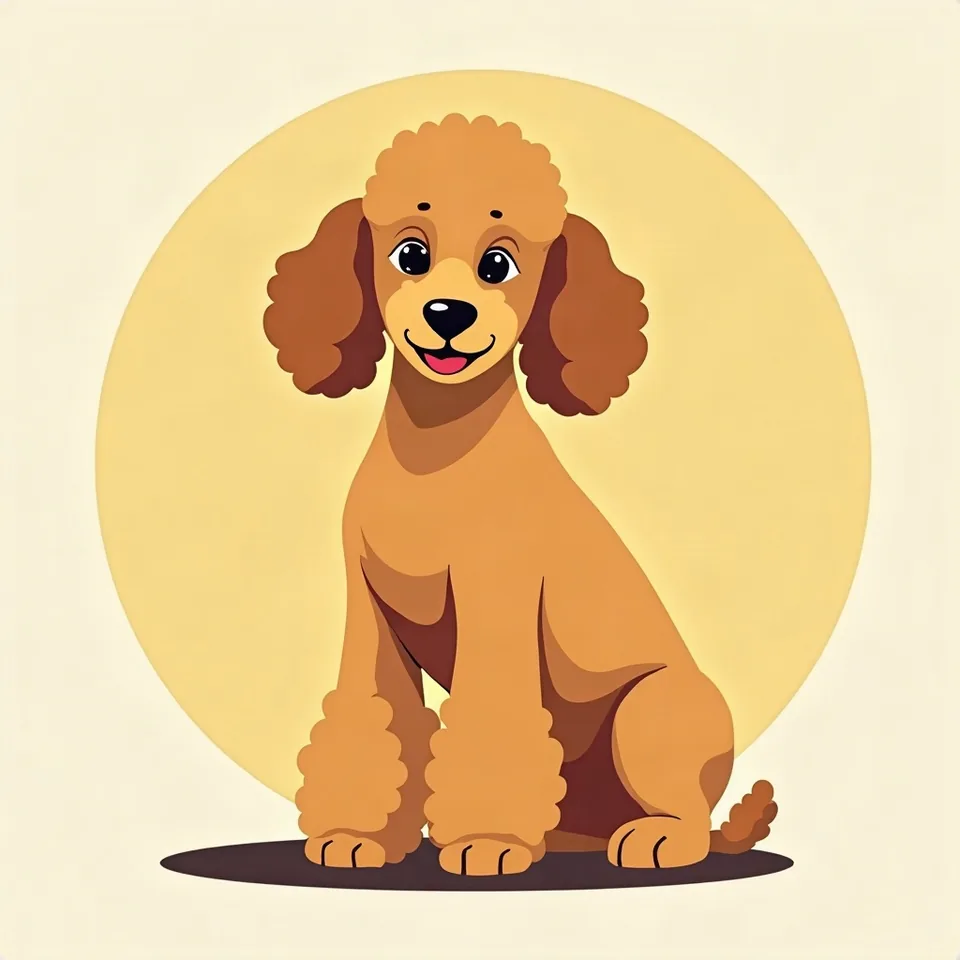
- Weight
- 4–15 kg9–33 lb
- Height
- 28–45 cm11–18 in
- Lifespan
- 12–16 yrs
- Size
- Small
- Activity
- High
- Adult at
- 12 months
- Senior from
- 10 yrs
- FCI group
- 9
How much food does a Poodle need?
The calculator starts at the breed average of 9.5 kg (21 lb). Put in your own dog's weight and the energy figure from the bag.
On the bag this is the metabolisable energy (ME). If it is given per kg, divide by 10. If it is in kJ, divide by 4.184.
Daily portion
— g
— oz · range — g
Per meal
— g
2 meals a day
Energy
— kcal
resting need — kcal
Usage: — kg a month (a 12 kg bag lasts about — days)
Cost: — a month
The full explanation of the maths is on the food portion calculator.
Feeding a Poodle: what matters
Nutrition needs vary a great deal across Poodle sizes. Miniature and Toy Poodles need an energy-dense food with smaller kibble and more protein per kilogram of body weight, while large Standard Poodles need a large-breed food with controlled calcium and phosphorus during growth to prevent joint problems.
Because of the breed's tendency toward sebaceous adenitis and generally sensitive skin, a good supply of quality animal protein and a supportive ratio of omega-3 to omega-6 fatty acids matters a great deal for Poodles. Cheap food that's high in grain and low in meat often shows up in Poodles as a dull coat and dry skin.
Because the Poodle is highly intelligent and gets bored easily, owners often unknowingly overfeed treats during training. For a Miniature or Toy Poodle weighing 3 to 5 kg (6.6 to 11 lb), just a couple of extra pieces of cheese a day is enough to noticeably tip the energy balance - treats need to be counted into the total daily ration, and small Poodles need microscopic portions.
Protein in the food
26–32 %
dry matter, mostly animal
Fat in the food
14–18 %
dry matter, by activity
What to watch for
- Overfeeding treats during training - the Poodle learns fast and owners reward often, which easily throws off the energy balance in small dogs.
- Needs vary by size - choose food based on your dog's actual weight, not the breed as a whole.
- Dry skin and a dull coat are signs of insufficient quality fat or protein in the food.
- Large Poodles carry a risk of bloat - feed smaller meals several times a day and don't let the dog gulp.
Practical feeding tips
- Always weigh the daily ration on a kitchen scale; for Miniature Poodles, even 10 extra grams of kibble makes a difference.
- Break training treats into nail-sized crumbs and subtract them from the daily food ration.
- Food with omega-3 fatty acids supports a healthy coat and eases the signs of skin problems.
- Feed large Poodles twice a day and keep at least an hour of rest after meals, without exercise.
- If you notice signs of sebaceous adenitis or chronic skin problems, talk to your vet about adding higher doses of omega-3 to the diet.
Feeding schedule by age
| Stage | Meals a day | Note |
|---|---|---|
| Puppy 8 to 12 weeks | 4x | Puppy food matched to the dog's expected adult size (miniature/small versus large breeds). |
| Puppy 3 to 6 months | 3x | Large Poodles need controlled calcium; Miniature and Toy Poodles need energy-dense small kibble. |
| Junior 6 to 12 months | 2-3x | Gradual transition to adult food; large Poodles transition later, around 15 months. |
| Adult | 2x | Food matched to size with coat support (omega-3, biotin); regular condition checks. |
| Senior from 10 years | 2x | Lower energy, joint and kidney support, easily digestible protein. |
Health risks that diet affects
Addison's disease (hypoadrenocorticism)
Poodles, especially Standards, are among the breeds with a demonstrably higher rate of this adrenal gland disease. Affected dogs cope poorly with stress and swings in energy intake, so they need regular feeding at the same time each day and a stable diet without frequent brand switching.
Sebaceous adenitis
An autoimmune disease affecting the skin glands that is well documented in Poodles. It shows up as dry skin, dandruff, and hair loss. Enough omega-3 fatty acids in the diet helps as supportive care, and supplementing beyond a standard diet can help further.
Bloat (gastric dilatation-volvulus)
Mainly affects large Standard Poodles with a deep chest. Feeding twice a day instead of one large meal, resting after eating, and avoiding fast gulping with a slow-feeder bowl all lower the risk.
Tartar and gum disease
In Miniature and Toy Poodles, the jaw is small and the teeth are often crowded, which speeds up tartar formation. Kibble with an abrasive texture or dental chews are a more useful preventive measure for small Poodles than for large breeds.
Patellar luxation
A slipping kneecap is a common inherited joint problem in small and Miniature Poodles. Keeping the dog lean noticeably reduces the load on the knee joints and slows the problem's progression.
Temperament and exercise
The Poodle is one of the most intelligent breeds there is, and that intelligence carries over into everything, including begging for food. It quickly learns that whining or fetching a toy earns a treat, and owners reward it without thinking twice. In small and Miniature dogs, that easily creates a calorie surplus that shows up fast on such a small frame.
Standard and larger Poodles have fairly high natural activity levels and get bored without enough exercise and mental stimulation, which often shows up as overeating or chewing on things they shouldn't. Miniature and Toy Poodles need less exercise but just as much mental engagement, or they compensate for that energy with food.
The Poodle's sensitive temperament shows up in digestion too - stress from a change of environment or being left alone is more likely to trigger diarrhea or loss of appetite than in hardier breeds. Introducing new food gradually matters more for the Poodle than for less sensitive dogs.
Coat: A dense, curly, non-shedding coat that needs regular clipping and mats easily without care.
Common questions about feeding a Poodle
How much should a Poodle weigh?
It depends on the size variety: a Toy Poodle weighs roughly 3 to 4 kg (6.6 to 8.8 lb), a Miniature 4 to 7 kg (8.8 to 15.4 lb), a Medium around 10 to 15 kg (22 to 33.1 lb), and a Standard 20 to 32 kg (44.1 to 70.5 lb). Condition matters more than the exact number - ribs should be easy to feel and a waist visible from above on every size.
How much food does a Poodle need per day?
For a Miniature Poodle weighing around 5 kg (11 lb), that's roughly 60 to 90 g of quality kibble a day; for a larger Poodle around 12 kg (26.5 lb), roughly 130 to 170 g, split into two meals. The exact amount depends on the energy value of the specific food and your dog's activity level, so use the calculator above.
What is the best food for a Poodle?
Choose food based on your dog's size - a Miniature or Toy Poodle needs small, energy-dense kibble, while a Standard Poodle needs a large-breed food with controlled calcium as a puppy. Across all sizes, a higher omega-3 fatty acid content is worthwhile given the breed's tendency toward skin problems.
Why does my Poodle have dry skin or dandruff?
It can be a sign of low-quality food that's short on fat and protein, but Poodles are also known for an autoimmune condition called sebaceous adenitis. Always discuss persistent coat and skin problems with your vet rather than adjusting the diet on your own.
How long do Poodles live?
Miniature and Toy Poodles commonly live 14 to 16 years, while large Standard Poodles usually live 12 to 14 years. Keeping a lean body condition and preventing joint and skin problems are among the main factors that affect lifespan.
How can I tell if my Poodle has Addison's disease?
Symptoms include fluctuating fatigue, vomiting, diarrhea, loss of appetite, and poor tolerance of stress. This isn't a problem that diet changes can fix - if you suspect it, a vet blood test is needed. Affected dogs do benefit from a regular, stable feeding routine without sudden changes.
Breeds of a similar size
Beagle
Small · 9–11 kg · 12–15 years
The Beagle is a scent-obsessed hound that will eat practically anything it finds, which makes it one of the breeds most prone to excess weight. Here's how precise portioning and smart feeding can prevent the obesity that shortens a Beagle's active life more than anything else.
Cavalier King Charles Spaniel
Small · 5.4–8 kg · 9–14 years
The Cavalier King Charles Spaniel is a small, affectionate breed with an unusually high risk of heart valve disease, a condition that excess weight directly worsens. Here's how precise feeding keeps a Cavalier lean and eases the strain on both its heart and a skull prone to syringomyelia.
Dachshund
Small · 7–14 kg · 12–16 years
The Dachshund's long back carries a high risk of intervertebral disc disease, and even a little extra weight makes that risk dramatically worse. Here's how precise feeding keeps a Dachshund lean and protects its sensitive spine for life.
French Bulldog
Small · 8–14 kg · 9–11 years
The French Bulldog is a brachycephalic breed in which even mild overweight noticeably worsens breathing and adds strain to a spine already prone to disc herniation. Here's how precise portioning and an easily digestible food keep a French Bulldog lean and healthy.
Sources
- FCI standard no. 172: Poodle
- WSAVA Global Nutrition Committee: Global Nutrition Guidelines
Last updated 2 September 2026.