Large breed
Rottweiler: feeding, nutrition and health
The Rottweiler is a powerfully built working breed at high risk of joint dysplasia, bone tumors, and bloat. We explain how controlled growth as a puppy and precise portioning in adulthood support the joints, skeleton, and healthy weight of this strong dog.
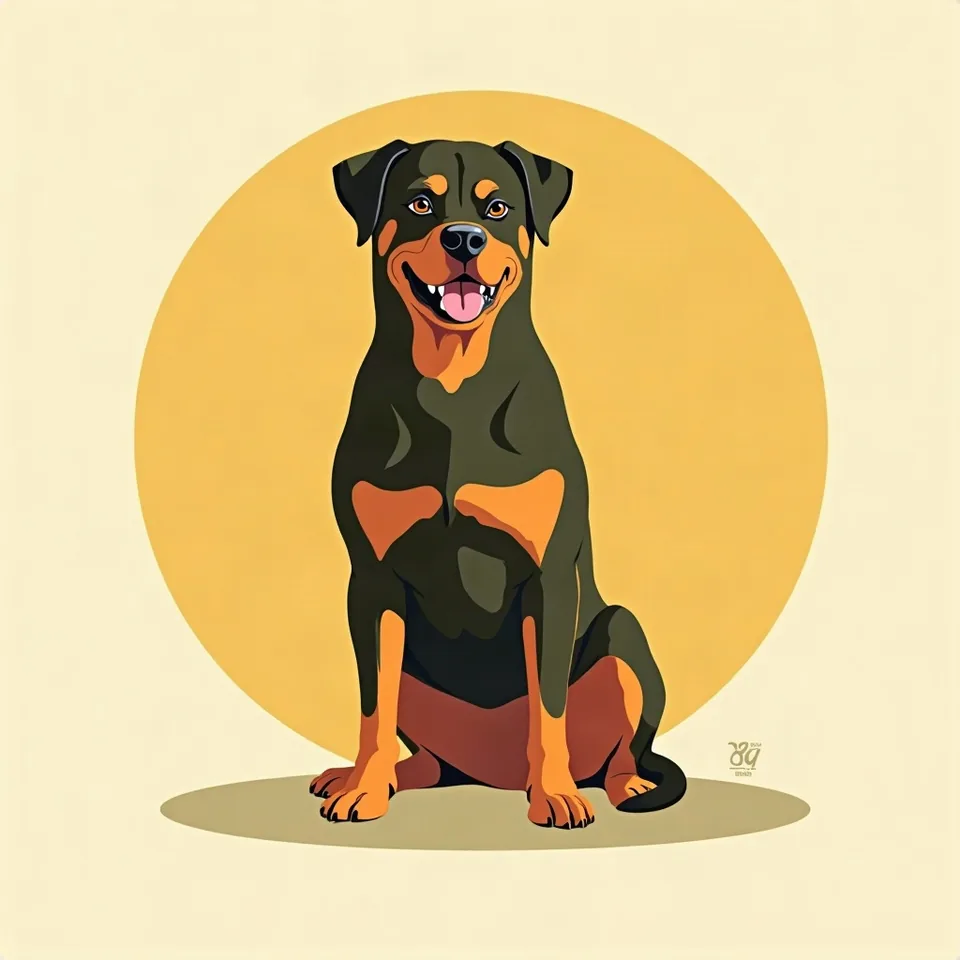
- Weight
- 35–60 kg77–132 lb
- Height
- 56–68 cm22–27 in
- Lifespan
- 9–10 yrs
- Size
- Large
- Activity
- High
- Adult at
- 18 months
- Senior from
- 7 yrs
- FCI group
- 2
How much food does a Rottweiler need?
The calculator starts at the breed average of 47.5 kg (105 lb). Put in your own dog's weight and the energy figure from the bag.
On the bag this is the metabolisable energy (ME). If it is given per kg, divide by 10. If it is in kJ, divide by 4.184.
Daily portion
— g
— oz · range — g
Per meal
— g
2 meals a day
Energy
— kcal
resting need — kcal
Usage: — kg a month (a 12 kg bag lasts about — days)
Cost: — a month
The full explanation of the maths is on the food portion calculator.
Feeding a Rottweiler: what matters
The Rottweiler needs a large-breed food with controlled energy and calcium content, especially in puppyhood, when rapid, uncontrolled growth raises the risk of dysplasia and other orthopedic defects. The goal is a puppy that grows slowly and evenly and stays on the lean side, not one that gains weight as fast as possible.
In adulthood, portion control is essential - the breed's strong appetite easily leads to excess weight, which further strains already at-risk joints. The ration should be based on actual activity and regularly checked body condition, not just a table value on the food bag.
Because of the deep chest and risk of bloat, it pays to feed a Rottweiler smaller meals several times a day and to slow down the pace of eating if the dog gulps its food. Joint support with glucosamine, chondroitin, and omega-3 fatty acids is worth starting preventively from a young age, given the breed's high body weight.
Protein in the food
24–28 %
dry matter, mostly animal
Fat in the food
12–15 %
dry matter, by activity
What to watch for
- Rapid puppy growth - the goal is a slowly and evenly growing, lean puppy, not the fastest possible weight gain.
- Bloat - feed smaller meals several times a day and rest after eating.
- Obesity adds further strain to joints already prone to dysplasia - check body condition by hand regularly.
- High body weight means a larger absolute ration - precisely weighing the food is a must, since even a small error is magnified.
Practical feeding tips
- Always weigh the daily ration on a kitchen scale.
- For a puppy, choose a large-breed food with a slower growth profile and controlled calcium.
- Feed an adult dog 2 to 3 times a day in smaller portions because of the risk of bloat.
- Introduce new food gradually over 7 to 10 days.
- Check body condition by feeling the ribs every 2 to 4 weeks, especially during puppyhood and adolescence.
Feeding schedule by age
| Stage | Meals a day | Note |
|---|---|---|
| Puppy 8 to 12 weeks | 4x | Large-breed puppy food with controlled calcium and energy content. |
| Puppy 3 to 8 months | 3x | Fastest growth phase; monitor body condition and rate of weight gain closely. |
| Junior 8 to 18 months | 2-3x | Continue large-breed food until skeletal growth is complete. |
| Adult 18 months to 7 years | 2-3x | Adult large-breed food, smaller portions because of the risk of bloat. |
| Senior from 7 years | 2-3x | Lower energy, joint support, and maintaining muscle mass. |
Health risks that diet affects
Hip and elbow dysplasia
One of the breed's most common inherited defects, made worse by rapid growth and excess weight in puppyhood. Controlled energy and calcium intake in puppies helps slow the growth rate to a level that's gentler on the joints.
Osteosarcoma (bone tumor)
The Rottweiler is among the breeds at the very highest risk of osteosarcoma, an aggressive bone tumor that mainly affects large, heavy dogs. Direct dietary prevention hasn't been proven, but slower, controlled growth in puppyhood is linked to a lower risk of orthopedic and bone problems generally.
Bloat (GDV)
A deep chest puts the Rottweiler among the breeds at high risk of gastric dilatation-volvulus. Feeding smaller meals several times a day, resting after eating, and avoiding strenuous activity right after a meal all lower the risk.
Obesity
A strong appetite and heavy build make the Rottweiler prone to excess weight, which adds further strain on joints that are already at risk. Precisely weighing the ration and regularly checking body condition are a must.
Rapid growth in puppyhood
As a large breed, the Rottweiler grows fast for a long time, and without controlling energy and minerals in the food, that raises the risk of joint and skeletal defects. A large-breed puppy food with a slower growth profile is a fundamental choice here, not a minor detail.
Temperament and exercise
A calm, confident, hardworking dog with substantial physical strength, in which controlling the pace of growth during puppyhood strongly affects joint health in adulthood. A fast-growing, chubby puppy is riskier for a Rottweiler than one that grows slowly and evenly.
A strong appetite combined with a heavy build means the Rottweiler gains weight easily if the feeding amount isn't guided by actual activity and body condition rather than a table value for a given weight.
As a deep-chested breed, the Rottweiler is prone to bloat, so the way it's fed - smaller portions, rest after eating - is as much a part of basic care as the choice of food itself.
Coat: A short, coarse, close-lying coat with an undercoat; moderate shedding, heavy twice a year.
Common questions about feeding a Rottweiler
How much should a Rottweiler weigh?
The commonly cited range is 50 to 60 kg (110.2 to 132.3 lb) for males and 35 to 48 kg (77.2 to 105.8 lb) for females, standing 61 to 68 cm (24 to 26.8 in) and 56 to 63 cm (22 to 24.8 in) at the shoulder respectively. Because of the breed's heavy muscling, condition needs to be judged by feeling the ribs - the number on the scale alone isn't enough.
How much food does a Rottweiler need per day?
An adult dog weighing 50 kg (110.2 lb) with average activity needs roughly 1,800 to 2,100 kcal a day, which with a food at 370 kcal/100 g works out to about 490 to 570 g, split into two or three meals. A less active or neutered dog needs less.
How do I slow a Rottweiler puppy's growth for the sake of its joints?
By choosing a large-breed puppy food with controlled energy and calcium content (around 1 to 1.5% on a dry-matter basis) and keeping the puppy lean rather than chubby. The goal is slow, even growth that reduces strain on developing joints and skeleton.
How do I lower the risk of bloat in a Rottweiler?
Feed 2 to 3 times a day in smaller portions instead of one large meal, slow down fast eaters with a slow-feeder bowl, and allow at least an hour of rest after eating. Bloat is an acute, life-threatening condition that requires immediate veterinary care.
How long do Rottweilers live?
On average 9 to 10 years, which for such a large, heavy breed is shaped mainly by a higher risk of bone tumors and joint disease. Controlled growth in puppyhood and a lean body condition in adulthood are factors that can improve quality of life in old age.
What food is right for a Rottweiler?
A large-breed food with 24 to 28% animal protein and 12 to 15% fat on a dry-matter basis, with joint support (glucosamine, chondroitin, omega-3). For puppies, a slower growth profile with controlled calcium is key; for adults, precise portioning against excess weight.
Breeds of a similar size
Akita
Large · 25–45 kg · 10–12 years
The Akita is a powerful, independent breed with a strong predisposition to autoimmune skin disease and thyroid problems. Here's how much an Akita should weigh, how diet affects autoimmune inflammation, and why careful feeding matters for this breed's risk of bloat.
American Staffordshire Terrier
Large · 18–32 kg · 12–14 years
The American Staffordshire Terrier is a muscular, powerful breed prone to skin allergies and to weight gain if its energetic temperament doesn't get enough exercise. Here's how to support muscle and joints through diet, and how to recognize a food allergy in this breed.
Boxer
Large · 25–32 kg · 9–11 years
The Boxer is a muscular, deep-bodied breed with an elevated risk of heart arrhythmia, cancer, and bloat. Here's how diet can support the heart and digestion, and how feeding practices can lower this breed's high risk of stomach twisting.
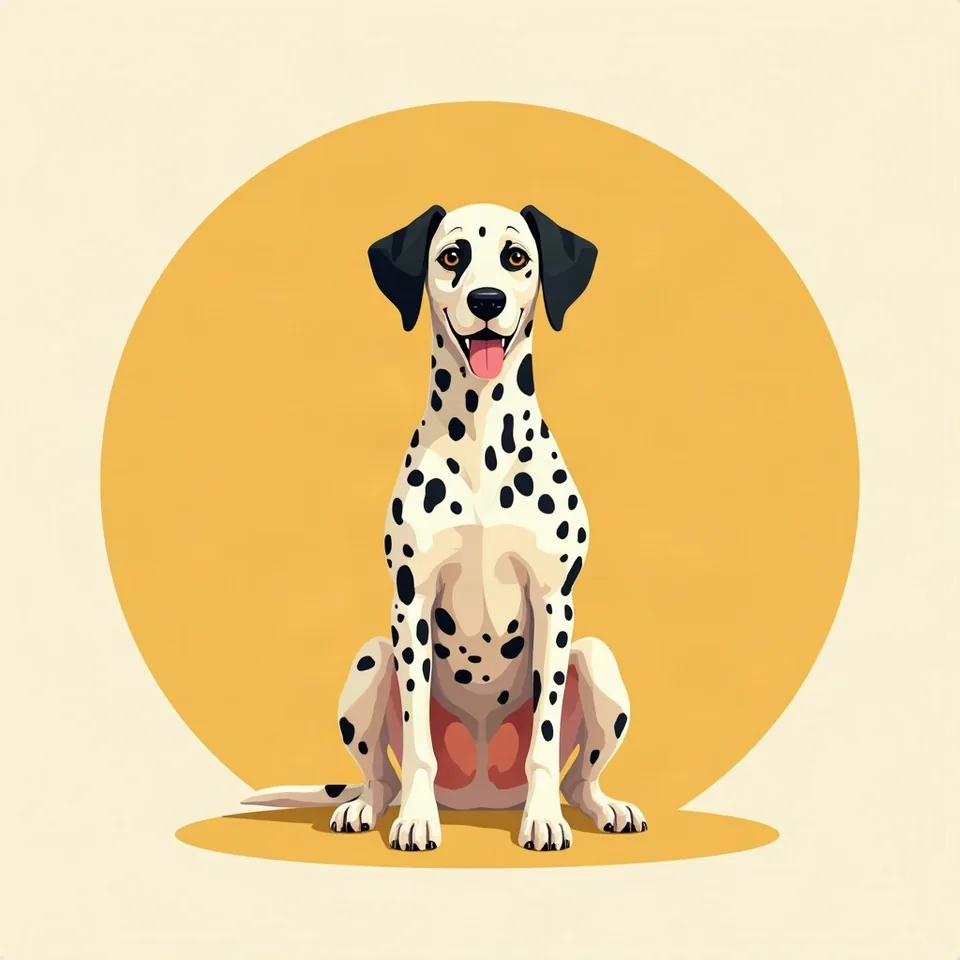
Dalmatian
Large · 24–32 kg · 11–13 years
The Dalmatian has a unique, genetically based disorder of purine metabolism that sets it apart from every other breed: it excretes an excessive amount of uric acid and is prone to urate bladder stones. Its diet therefore needs to be low in purines, moderate in protein, and built around good hydration.
Sources
- FCI standard no. 147: Rottweiler
- WSAVA Global Nutrition Committee: Global Nutrition Guidelines
- Orthopedic Foundation for Animals (OFA): hip dysplasia and osteosarcoma statistics by breed
Last updated 2 September 2026.