Large breed
Dalmatian: feeding, nutrition and health
The Dalmatian has a unique, genetically based disorder of purine metabolism that sets it apart from every other breed: it excretes an excessive amount of uric acid and is prone to urate bladder stones. Its diet therefore needs to be low in purines, moderate in protein, and built around good hydration.
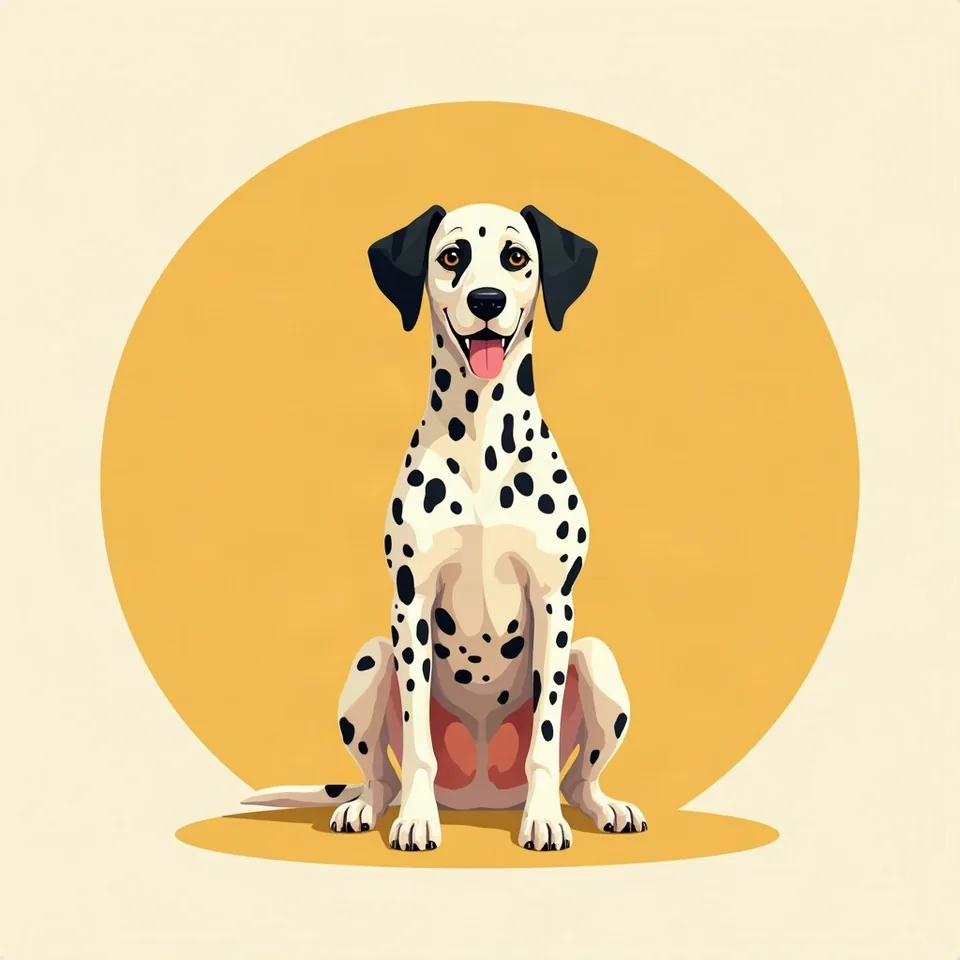
- Weight
- 24–32 kg53–71 lb
- Height
- 54–62 cm21–24 in
- Lifespan
- 11–13 yrs
- Size
- Large
- Activity
- Very high
- Adult at
- 15 months
- Senior from
- 7 yrs
- FCI group
- 6
How much food does a Dalmatian need?
The calculator starts at the breed average of 28 kg (62 lb). Put in your own dog's weight and the energy figure from the bag.
On the bag this is the metabolisable energy (ME). If it is given per kg, divide by 10. If it is in kJ, divide by 4.184.
Daily portion
— g
— oz · range — g
Per meal
— g
2 meals a day
Energy
— kcal
resting need — kcal
Usage: — kg a month (a 12 kg bag lasts about — days)
Cost: — a month
The full explanation of the maths is on the food portion calculator.
Feeding a Dalmatian: what matters
The Dalmatian is the one common breed whose nutritional guidance is driven not primarily by size but by a genetic disorder of purine metabolism. Because of the SLC2A9 gene mutation, it excretes excessive uric acid, so it needs a food with moderate, not maximal, protein and a low purine content.
Organ meat (liver, kidney, spleen), sardines, anchovies, and other high-purine foods need to be permanently excluded from the diet, and excess red meat limited too. Veterinary prescription diets with low purine content exist specifically for dogs with hyperuricosuria or after an episode of urate stones.
Hydration matters just as much as food composition. Plenty of fresh water dilutes the urine and lowers uric acid concentration, directly reducing the risk of stone formation. Wet food, or adding water to kibble, increases total fluid intake and is a practical, easy-to-implement measure for a Dalmatian.
Protein in the food
18–24 %
dry matter, mostly animal
Fat in the food
12–16 %
dry matter, by activity
What to watch for
- Organ meat, sardines, anchovies, and other purine-rich foods are permanent no-gos for a Dalmatian, not just an occasional restriction.
- Insufficient water intake raises urine concentration and the risk of crystal formation, so a bowl of fresh water must always be available.
- Body condition: this energetic breed gains weight easily without enough exercise, so regularly feel the ribs and check the waist.
- Signs of urinary trouble (frequent urging, blood in the urine, painful urination) call for an immediate vet visit.
Practical feeding tips
- Choose a food with moderate protein (18 to 24 percent on a dry matter basis), not a standard high-protein large-breed kibble.
- Permanently exclude organ meat, sardines, and anchovies from the diet, even as an occasional treat.
- Encourage a higher fluid intake: wet food, water added to kibble, and several water bowls around the house.
- After an episode of urate stones, consider a veterinary prescription low-purine diet.
- Feed at set times 2 to 3 times a day and watch body condition; high energy doesn't mean unlimited food.
Feeding schedule by age
| Stage | Meals a day | Note |
|---|---|---|
| Puppy 8 to 12 weeks | 4x | A large-breed puppy food with moderate protein, free of organ meat and fish additions. |
| Puppy 3 to 8 months | 3x | Controlled growth; keep the puppy lean and avoid meaty treats high in purines. |
| Junior 8 to 15 months | 2-3x | Transition to a low-purine adult food, with plenty of water at the bowl. |
| Adult 15 months to 7 years | 2x | A low-purine food, with regular exercise matching the breed's high energy. |
| Senior from 7 years | 2x | Lower energy, continuing the low-purine regimen, with water intake and urination monitored. |
Health risks that diet affects
Hyperuricosuria and urate bladder stones
Unlike almost every other breed, the Dalmatian has a genetically based disorder of purine metabolism (a mutation in the SLC2A9 gene) that causes it to excrete far more uric acid in its urine. This leads to the formation of urate stones, mainly in males. The fix is a low-purine diet, avoiding organ meat, and a high water intake.
Congenital deafness
Linked to the gene for the breed's spotted coat, this affects part of the breed population in one or both ears. Diet has no influence on it, but it's an important health fact, and anyone considering a puppy should confirm with the breeder that it has had a BAER hearing test.
Hip dysplasia
Less common in the Dalmatian than in other large breeds, but it still occurs. Controlled, slow puppy growth using a large-breed food without excess energy or calcium lowers the risk.
Obesity
A highly energetic breed that easily gains weight if the owner doesn't provide enough exercise to match its endurance-driven nature. Excess weight in a Dalmatian also increases urine concentration and the risk of crystal formation, making it riskier than in other breeds.
Skin allergies and sensitivity
Skin problems and itching are fairly commonly reported in the breed. Some cases are linked to food intolerance, so for recurring problems it's worth considering a single-protein elimination diet under a vet's guidance.
Temperament and exercise
The Dalmatian is an energetic, tireless breed originally bred to run alongside horse-drawn carriages over long distances. It needs at least one to two hours of active exercise a day, without which it easily gains weight and becomes restless.
Despite its high energy, it isn't a true chowhound, but because of its specific purine metabolism disorder, exactly what it eats matters as much as how much. Organ meat, fish, and excess meat are permanent no-gos, not just suggestions.
The Dalmatian tolerates a regular feeding routine well and doesn't have a strong tendency to bolt its food, but it needs constant access to fresh water. A high fluid intake is a direct part of stone prevention for this breed, not just general advice.
Coat: Short, dense, fine coat with the breed's characteristic black or liver spots on a white background.
Common questions about feeding a Dalmatian
How much should a Dalmatian weigh?
Under the FCI standard, adult males weigh 27 to 32 kg (60 to 71 lb) and females 24 to 29 kg (53 to 64 lb), standing 56 to 62 cm and 54 to 60 cm at the shoulder respectively. Thanks to a muscular, athletic build, it should have a visible waist and easily felt ribs even at a healthy weight.
How much food does a Dalmatian need per day?
An adult dog weighing 27 kg (60 lb) with average activity needs roughly 1,100 to 1,300 kcal a day, which works out to about 300 to 350 g of a typical kibble split into 2 meals. Choosing a low-purine food matters more, though, than the exact amount.
What food is suitable for a Dalmatian?
A food with moderate protein (18 to 24 percent on a dry matter basis), free of organ meat and fish meals high in purines. Avoid foods marketed as high-protein "for active dogs", since in a Dalmatian they can worsen the risk of urate stone formation.
How long do Dalmatians live?
Average lifespan is 11 to 13 years, above average for a large breed. The key to that longevity is a properly managed low-purine diet and plenty of fluids, which reduce the risk of recurring urinary tract problems.
Why can't Dalmatians eat organ meat?
The Dalmatian has a genetically based disorder of purine metabolism and excretes far more uric acid than other breeds. Organ meat, sardines, and anchovies are high in purines, which the body converts into uric acid and which raise the risk of urate bladder stones.
How much water should a Dalmatian drink?
A Dalmatian should have constant access to fresh water and typically drinks more than other breeds of similar size. A higher fluid intake dilutes the urine and lowers uric acid concentration, which is direct stone prevention for this breed, not just general advice.
Breeds of a similar size
Akita
Large · 25–45 kg · 10–12 years
The Akita is a powerful, independent breed with a strong predisposition to autoimmune skin disease and thyroid problems. Here's how much an Akita should weigh, how diet affects autoimmune inflammation, and why careful feeding matters for this breed's risk of bloat.

American Staffordshire Terrier
Large · 18–32 kg · 12–14 years
The American Staffordshire Terrier is a muscular, powerful breed prone to skin allergies and to weight gain if its energetic temperament doesn't get enough exercise. Here's how to support muscle and joints through diet, and how to recognize a food allergy in this breed.

Boxer
Large · 25–32 kg · 9–11 years
The Boxer is a muscular, deep-bodied breed with an elevated risk of heart arrhythmia, cancer, and bloat. Here's how diet can support the heart and digestion, and how feeding practices can lower this breed's high risk of stomach twisting.
Dobermann
Large · 32–45 kg · 10–13 years
The Dobermann is a lean, athletic breed with a high risk of dilated cardiomyopathy, a condition where diet has a demonstrated role. Here's how choosing the right food and taurine intake can support the heart, how controlled growth protects the neck, and how to lower the risk of bloat.
Sources
- FCI standard no. 153: Dalmatian
- WSAVA Global Nutrition Guidelines
Last updated 2 September 2026.