Large breed
Dobermann: feeding, nutrition and health
The Dobermann is a lean, athletic breed with a high risk of dilated cardiomyopathy, a condition where diet has a demonstrated role. Here's how choosing the right food and taurine intake can support the heart, how controlled growth protects the neck, and how to lower the risk of bloat.
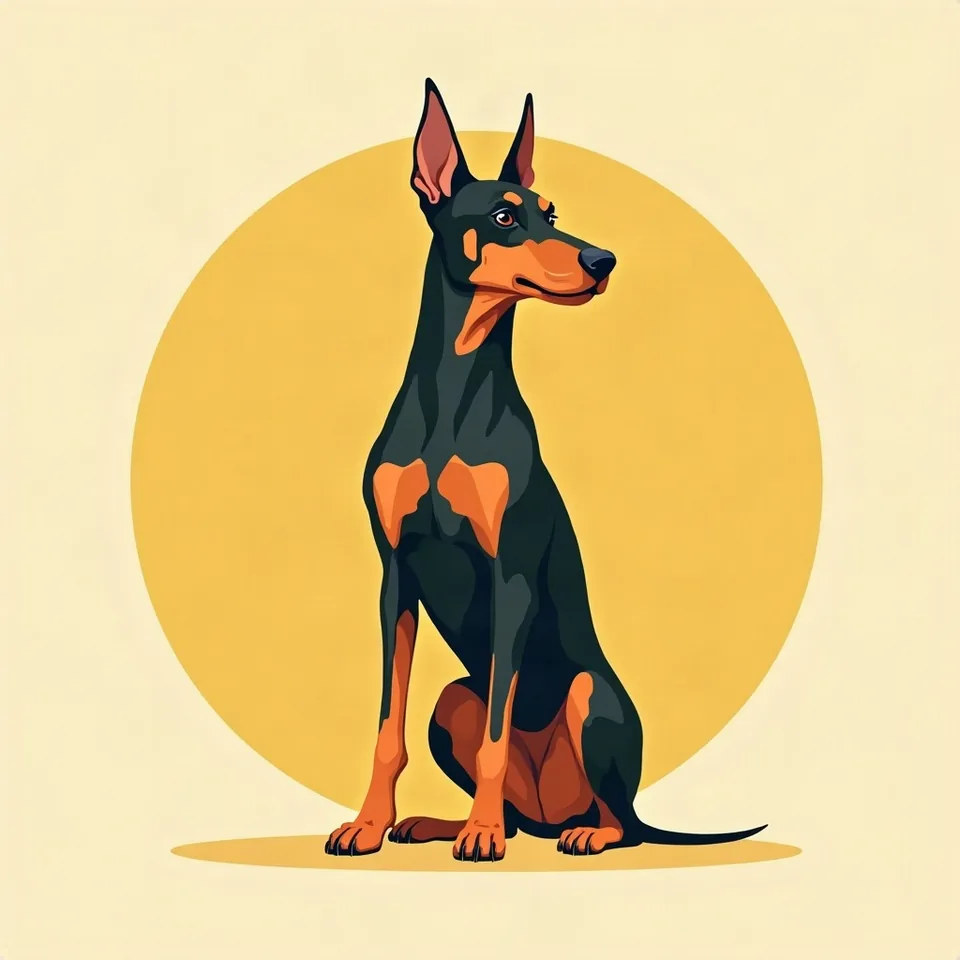
- Weight
- 32–45 kg71–99 lb
- Height
- 63–72 cm25–28 in
- Lifespan
- 10–13 yrs
- Size
- Large
- Activity
- Very high
- Adult at
- 15 months
- Senior from
- 7 yrs
- FCI group
- 2
How much food does a Dobermann need?
The calculator starts at the breed average of 38.5 kg (85 lb). Put in your own dog's weight and the energy figure from the bag.
On the bag this is the metabolisable energy (ME). If it is given per kg, divide by 10. If it is in kJ, divide by 4.184.
Daily portion
— g
— oz · range — g
Per meal
— g
2 meals a day
Energy
— kcal
resting need — kcal
Usage: — kg a month (a 12 kg bag lasts about — days)
Cost: — a month
The full explanation of the maths is on the food portion calculator.
Feeding a Dobermann: what matters
Given the Dobermann's high risk of dilated cardiomyopathy, it's essential to avoid long-term feeding of so-called BEG diets with nontraditional protein sources and an excessive share of legumes, which have been linked to lower taurine levels and DCM risk. A safer choice is a food from a reputable manufacturer with a traditional composition and a proven formula.
The rapid growth of a large breed calls for a large-breed puppy food with controlled energy and calcium content, supporting slower, more even skeletal development, including the neck. Overfeeding a growing puppy increases the load on both the joints and the spine regardless of the specific food's composition.
Given the risk of bloat, it's worth feeding a Dobermann several smaller meals a day, slowing down the eating pace for dogs that gulp their food, and allowing rest after eating. Given its lean, athletic build and high activity, a Dobermann needs plenty of quality protein to maintain muscle mass.
Protein in the food
26–30 %
dry matter, mostly animal
Fat in the food
12–16 %
dry matter, by activity
What to watch for
- DCM risk: avoid long-term feeding of grain-free and exotic diets with nontraditional protein sources that lack a proven formula.
- Rapid growth of the neck during puppyhood calls for controlled energy intake using a large-breed food.
- Bloat: feed several smaller meals a day and rest after eating.
- At signs of fatigue, weakness, or labored breathing, see a vet immediately; these can be early signs of heart disease.
Practical feeding tips
- Always weigh the daily ration on a kitchen scale.
- Choose a food from a reputable manufacturer with a traditional, proven composition; if in doubt about taurine content, consult your vet.
- Feed 2 to 3 times a day in smaller portions because of the risk of bloat.
- Introduce a new food gradually over 7 to 10 days.
- Given the breed's high DCM risk, consider regular cardiac screening (echocardiography) even without obvious symptoms.
Feeding schedule by age
| Stage | Meals a day | Note |
|---|---|---|
| Puppy 8 to 12 weeks | 4x | A large-breed puppy food with controlled calcium and energy content. |
| Puppy 3 to 8 months | 3x | Rapid growth of the skeleton and neck; monitor condition and avoid overfeeding. |
| Junior 8 to 15 months | 2-3x | Stay on a large-breed food until growth is complete. |
| Adult 15 months to 7 years | 2-3x | A food with a proven composition, in smaller portions because of the risk of bloat. |
| Senior from 7 years | 2-3x | Heart and joint support, with regular cardiac checkups. |
Health risks that diet affects
Dilated cardiomyopathy (DCM)
The Dobermann is among the breeds with the very highest rate of DCM, a heart muscle disease that leads to heart failure. A link has been documented in the breed with taurine deficiency, particularly with long-term feeding of so-called BEG diets (boutique, exotic-ingredient, grain-free) built on nontraditional protein sources. Choosing a food with a proven track record and regular cardiac checkups are essential for this breed.
Wobbler syndrome (cervical spondylomyelopathy)
Instability of the neck vertebrae, affecting large breeds including the Dobermann in particular. Controlled, slower growth during puppyhood, using a food with reasonable energy and calcium content, is one of the measures that can lower the risk.
Von Willebrand disease
An inherited blood clotting disorder common in the breed. It isn't directly related to feeding, but owners should know that with an elevated bleeding risk, caution is needed with supplements and medications that affect blood clotting, always after consulting a vet.
Bloat (gastric dilatation-volvulus)
A deep chest raises the risk of stomach twisting, an acute, life-threatening condition. Feeding several smaller meals a day, resting after eating, and avoiding strenuous exertion right after feeding all lower the risk.
Temperament and exercise
A highly energetic, alert, and quick-to-learn dog with a strong need for both physical and mental work. Its lean, athletic build means a smaller body reserve than stockier breeds have, so a Dobermann tolerates an undersized food ration worse than breeds carrying more body fat.
Rapid growth during puppyhood in such a large breed calls for controlled energy intake, since overloading a fast-growing neck is linked to the risk of what's known as wobbler syndrome.
Because of its deep chest, the Dobermann is among the breeds at higher risk of bloat, which makes how you feed it just as important a part of care as which food you choose.
Coat: Short, harsh, smooth-lying coat with no undercoat, sensitive to cold; sheds lightly and consistently year-round.
Common questions about feeding a Dobermann
How much should a Dobermann weigh?
The commonly cited range is 40 to 45 kg (88 to 99 lb) for males and 32 to 35 kg (71 to 77 lb) for females, standing 68 to 72 cm and 63 to 68 cm at the shoulder respectively. Given its lean, athletic build, both underweight and overweight are more noticeable in a Dobermann than in stockier breeds.
How much food does a Dobermann need per day?
An adult dog weighing 40 kg (88 lb) with high activity needs roughly 1,500 to 1,800 kcal a day, which works out to about 400 to 490 g of a 370 kcal/100 g food, split into two or three meals. A less active or older dog needs less.
How is feeding related to heart disease risk in a Dobermann?
A link has been documented in the breed between long-term feeding of grain-free diets with nontraditional protein sources (so-called BEG diets) and lower taurine levels, which may contribute to dilated cardiomyopathy. A food from a reputable manufacturer with a traditional, proven formula, plus regular cardiac checkups with your vet, is the safer path.
What is wobbler syndrome, and can diet prevent it?
It's an instability of the neck vertebrae typical of large breeds including the Dobermann, showing up as an unsteady gait in the hind legs. Controlled, slower growth during puppyhood using a large-breed food with reasonable energy and calcium content is one of the measures that can lower the risk, though it doesn't guarantee full prevention.
How long do Dobermanns live?
On average, 10 to 13 years, though actual lifespan is shortened in part of the population by the high rate of dilated cardiomyopathy. Regular cardiac checkups and a suitable diet are among the factors that can improve the quality and length of an active life.
What food is suitable for a Dobermann?
A large-breed food with 26 to 30 percent animal protein and 12 to 16 percent fat on a dry matter basis, from a reputable manufacturer with a traditional composition and no unnecessarily exotic protein sources. For puppies, a controlled growth profile is key; for adults, plenty of quality protein supports the athletic build.
Breeds of a similar size
Akita
Large · 25–45 kg · 10–12 years
The Akita is a powerful, independent breed with a strong predisposition to autoimmune skin disease and thyroid problems. Here's how much an Akita should weigh, how diet affects autoimmune inflammation, and why careful feeding matters for this breed's risk of bloat.
American Staffordshire Terrier
Large · 18–32 kg · 12–14 years
The American Staffordshire Terrier is a muscular, powerful breed prone to skin allergies and to weight gain if its energetic temperament doesn't get enough exercise. Here's how to support muscle and joints through diet, and how to recognize a food allergy in this breed.
Boxer
Large · 25–32 kg · 9–11 years
The Boxer is a muscular, deep-bodied breed with an elevated risk of heart arrhythmia, cancer, and bloat. Here's how diet can support the heart and digestion, and how feeding practices can lower this breed's high risk of stomach twisting.
Dalmatian
Large · 24–32 kg · 11–13 years
The Dalmatian has a unique, genetically based disorder of purine metabolism that sets it apart from every other breed: it excretes an excessive amount of uric acid and is prone to urate bladder stones. Its diet therefore needs to be low in purines, moderate in protein, and built around good hydration.
Sources
- FCI standard no. 143: Dobermann
- WSAVA Global Nutrition Committee: Global Nutrition Guidelines
- FDA: Investigation into a potential link between certain diets and canine dilated cardiomyopathy
Last updated 2 September 2026.