Large breed
Rhodesian Ridgeback: feeding, nutrition and health
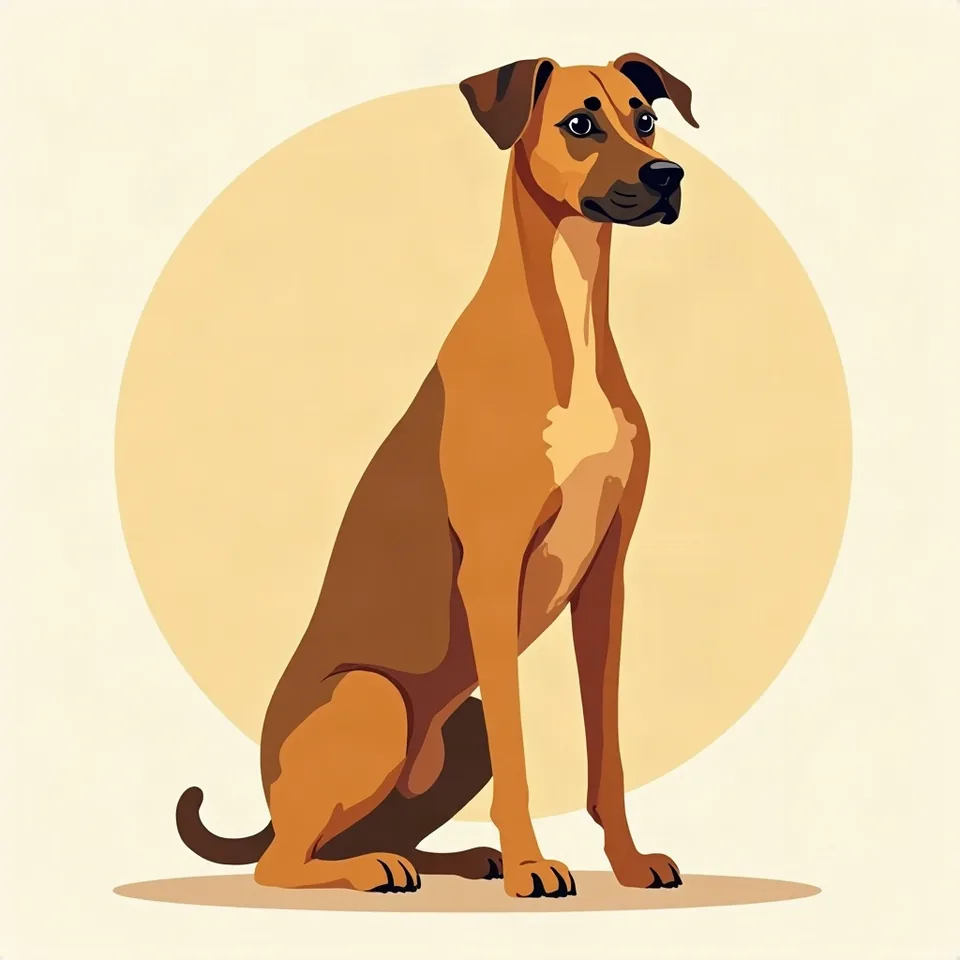
The Rhodesian Ridgeback is a tough, enduring breed developed to hunt over long distances, and it needs quality protein to maintain muscle mass along with carefully managed growth as a puppy because of the risk of joint disorders and a deep chest prone to bloat.
- Weight
- 30–40 kg66–88 lb
- Height
- 61–69 cm24–27 in
- Lifespan
- 10–12 yrs
- Size
- Large
- Activity
- High
- Adult at
- 15 months
- Senior from
- 7 yrs
- FCI group
- 6
How much food does a Rhodesian Ridgeback need?
The calculator starts at the breed average of 35 kg (77 lb). Put in your own dog's weight and the energy figure from the bag.
On the bag this is the metabolisable energy (ME). If it is given per kg, divide by 10. If it is in kJ, divide by 4.184.
Daily portion
— g
— oz · range — g
Per meal
— g
2 meals a day
Energy
— kcal
resting need — kcal
Usage: — kg a month (a 12 kg bag lasts about — days)
Cost: — a month
The full explanation of the maths is on the food portion calculator.
Feeding a Rhodesian Ridgeback: what matters
As an endurance working breed, the Rhodesian Ridgeback needs a large-breed food with quality animal protein to maintain its substantial muscle mass. Energy density should match the dog's actual activity, not the breed's general reputation as an 'athletic' dog.
An adult dog weighing 35 kg (77.2 lb) with average activity needs roughly 1,500 to 1,800 kcal a day. Because of the deep chest and risk of bloat, split the ration into 2 to 3 meals and avoid intense exercise for an hour before and after eating. A neutered or less active dog needs the ration cut by roughly 15 to 20%, or it gains weight easily.
Puppies should grow slowly and evenly - a large-breed puppy food with a controlled calcium-to-phosphorus ratio protects developing joints. Gaining weight too fast in the first year raises the risk of hip dysplasia. Check a puppy's weight regularly against the breed's growth curve, not against the impression that 'bigger is healthier.'
Protein in the food
24–28 %
dry matter, mostly animal
Fat in the food
13–17 %
dry matter, by activity
What to watch for
- Condition: ribs should be easy to feel, waist visible from above, checked every 2 to 4 weeks.
- Rate of puppy growth - weigh every 2 weeks and skip extra calcium supplements.
- Feeding around exercise - no food right before or after intense activity because of the risk of bloat.
- Unexplained weight gain despite the same feeding amount can signal a thyroid problem.
Practical feeding tips
- Weigh the daily ration on a kitchen scale and split it into 2 to 3 meals at fixed times.
- Use a large-breed food with controlled growth up to 15 months of age.
- After neutering or at lower activity levels, cut the ration appropriately - the risk of excess weight is real.
- When switching to a new food, mix the old and new for 7 to 10 days.
- If you suspect an underactive thyroid, get bloodwork done rather than just adjusting the feeding amount.
Feeding schedule by age
| Stage | Meals a day | Note |
|---|---|---|
| Puppy 8 to 12 weeks | 4x | Large-breed puppy food with controlled calcium. |
| Puppy 3 to 7 months | 3x | Fast growth phase; make sure the puppy stays lean. |
| Junior 7 to 15 months | 2-3x | Continue large-breed food until skeletal growth is complete. |
| Adult 15 months to 7 years | 2x | Adult large-breed food, ration adjusted to activity level. |
| Senior from 7 years | 2x | Lower energy, joint and thyroid support, weight control. |
Health risks that diet affects
Dermoid sinus
A congenital defect linked to the gene for the breed's signature ridge - a tunnel connecting the skin to the spinal canal, typically treated surgically. Diet has no direct effect on it, but it's an important health quirk of the breed that every owner should know about.
Hip dysplasia
An inherited joint defect made worse by rapid growth and excess weight in puppyhood. A large-breed food with controlled energy and calcium content (1.0 to 1.5% on a dry-matter basis) is basic prevention.
Hypothyroidism
An underactive thyroid gland with a higher rate in the breed in adulthood and old age, directly affecting metabolism and weight. Unexplained weight gain despite a standard feeding amount is a reason to have the thyroid checked by your vet.
Bloat (GDV)
A deep chest is one of the risk factors for gastric dilatation-volvulus. Feeding 2 to 3 times a day instead of one large meal, resting after eating, and avoiding gulping all lower the risk.
Obesity
A real risk in less active dogs despite the athletic build - excess energy from treats and an overestimated feeding amount is easy to miss in such a powerful breed. Regular hands-on rib checks are a must.
Temperament and exercise
The Rhodesian Ridgeback is an enduring, calmly confident dog with high physical stamina but without unnecessary hyperactivity in the house. It needs regular, longer exercise, not just short walks, or its energy turns into destructive behavior.
A muscular, athletic build requires plenty of quality animal protein to maintain muscle mass, but the breed also tends to gain weight easily at lower activity levels if the ration doesn't match its actual energy output.
Puppies grow quickly in both height and weight, which raises the stakes on controlled, slow weight gain and precisely dosed calcium in a large-breed food for this powerful breed.
Coat: A short, dense, glossy coat with the breed's signature ridge of hair along the spine growing in the opposite direction; wheaten in color.
Common questions about feeding a Rhodesian Ridgeback
How much should a Rhodesian Ridgeback weigh?
Under the FCI standard, males typically weigh around 36.5 kg (80.5 lb) and females around 32 kg (70.5 lb), standing 63 to 69 cm (24.8 to 27.2 in) at the shoulder for males and 61 to 66 cm (24 to 26 in) for females. Condition, with a visible waist and easily felt ribs, matters more than the exact number on the scale.
How much food does a Rhodesian Ridgeback need per day?
An adult dog weighing 35 kg (77.2 lb) with average activity needs roughly 1,500 to 1,800 kcal a day, which works out to about 400 to 490 g a day of typical kibble (370 kcal/100 g), split into 2 meals. A less active or neutered dog needs less.
What food is right for a Rhodesian Ridgeback?
A large-breed food with 24 to 28% protein, 13 to 17% fat, and quality animal sources to maintain muscle mass, since this is a lean, athletic breed. Puppies need food with a controlled calcium-to-phosphorus ratio until 15 months of age, when skeletal growth is complete.
How long do Rhodesian Ridgebacks live?
The average lifespan is 10 to 12 years. Keeping a lean body condition, plenty of exercise, and regular thyroid checks in older dogs are among the main factors that affect this breed's health and lifespan.
What is a dermoid sinus in a Rhodesian Ridgeback?
It's a congenital defect linked to the gene for the breed's signature ridge along the spine - a tunnel connecting the skin to the spinal canal that can lead to infections. It's treated surgically, diet has no effect on it, but it's an important breed quirk that owners often ask about.
Why does my Rhodesian Ridgeback gain weight despite looking athletic?
A muscular build can mask excess weight, and if a dog's activity drops below its genetic potential, it gains weight easily. Unexplained weight gain in an adult or older dog is also a common sign of an underactive thyroid.
Breeds of a similar size
Akita
Large · 25–45 kg · 10–12 years
The Akita is a powerful, independent breed with a strong predisposition to autoimmune skin disease and thyroid problems. Here's how much an Akita should weigh, how diet affects autoimmune inflammation, and why careful feeding matters for this breed's risk of bloat.
American Staffordshire Terrier
Large · 18–32 kg · 12–14 years
The American Staffordshire Terrier is a muscular, powerful breed prone to skin allergies and to weight gain if its energetic temperament doesn't get enough exercise. Here's how to support muscle and joints through diet, and how to recognize a food allergy in this breed.
Boxer
Large · 25–32 kg · 9–11 years
The Boxer is a muscular, deep-bodied breed with an elevated risk of heart arrhythmia, cancer, and bloat. Here's how diet can support the heart and digestion, and how feeding practices can lower this breed's high risk of stomach twisting.
Dalmatian
Large · 24–32 kg · 11–13 years
The Dalmatian has a unique, genetically based disorder of purine metabolism that sets it apart from every other breed: it excretes an excessive amount of uric acid and is prone to urate bladder stones. Its diet therefore needs to be low in purines, moderate in protein, and built around good hydration.
Sources
- FCI standard no. 146: Rhodesian Ridgeback
- WSAVA Global Nutrition Guidelines
Last updated 2 September 2026.