Large breed
German Shepherd Dog: feeding, nutrition and health
The German Shepherd Dog is an all purpose working breed with high energy needs, but also a tendency toward joint dysplasia, degenerative myelopathy, and digestive sensitivity including pancreatic insufficiency. Here's how to support the joints, spine, and gut with diet at every life stage.
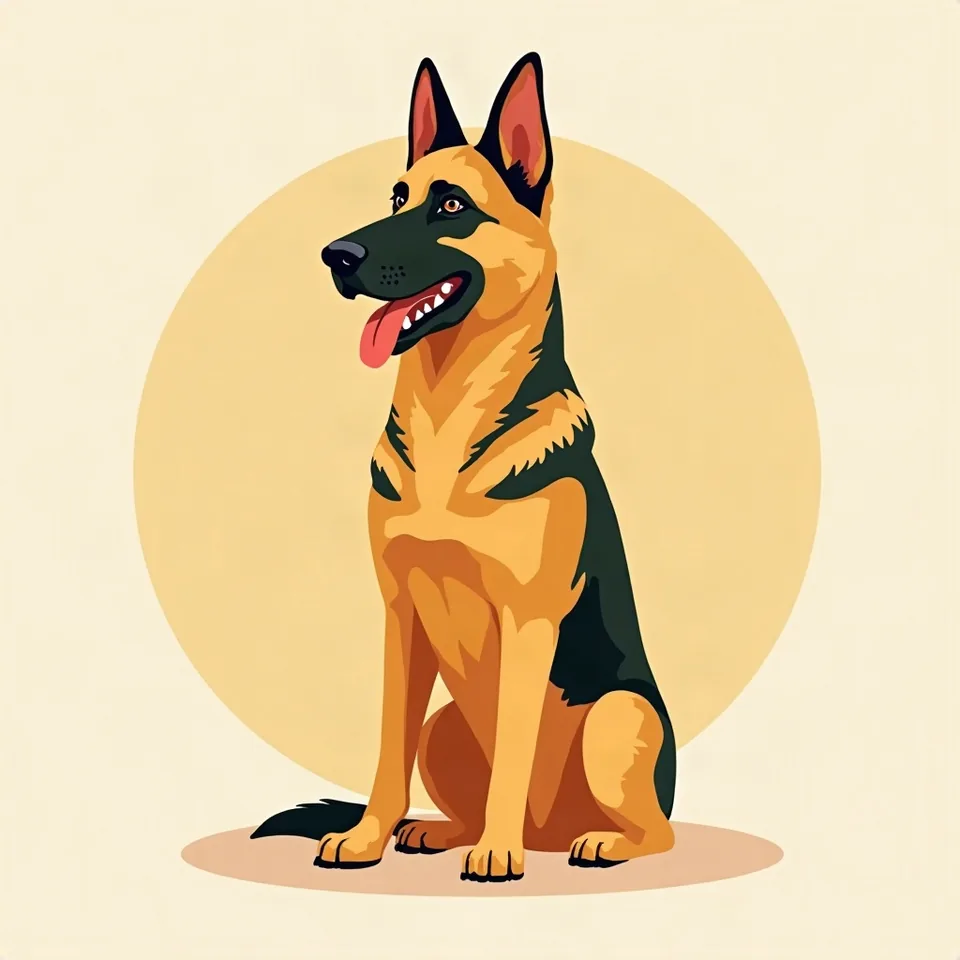
- Weight
- 22–40 kg49–88 lb
- Height
- 55–65 cm22–26 in
- Lifespan
- 9–13 yrs
- Size
- Large
- Activity
- Very high
- Adult at
- 15 months
- Senior from
- 7 yrs
- FCI group
- 1
How much food does a German Shepherd Dog need?
The calculator starts at the breed average of 31 kg (68 lb). Put in your own dog's weight and the energy figure from the bag.
On the bag this is the metabolisable energy (ME). If it is given per kg, divide by 10. If it is in kJ, divide by 4.184.
Daily portion
— g
— oz · range — g
Per meal
— g
2 meals a day
Energy
— kcal
resting need — kcal
Usage: — kg a month (a 12 kg bag lasts about — days)
Cost: — a month
The full explanation of the maths is on the food portion calculator.
Feeding a German Shepherd Dog: what matters
The German Shepherd Dog needs a large breed food with a balanced calcium to phosphorus ratio and moderately high energy density, since fast skeletal growth combines with high muscle building demands in this breed. Working and sport line dogs have significantly higher energy needs than less active companion line dogs, so the portion should be based on real workload, not the number on the bag.
Given how common digestive sensitivity and EPI are in this breed, it's worth choosing food with a clearly stated, easily digestible protein source and no unnecessary additives. Chronic digestive trouble, weight loss despite a good appetite, or bulky fatty stools call for veterinary testing for EPI before trying yet another food.
Joints and the spine are a lifelong concern for the German Shepherd. Glucosamine, chondroitin, and omega 3 fatty acids from fish oil belong in the diet from puppyhood, and continue to help slow the progression of arthritis in adult and senior dogs. Keeping a lean body condition for life remains the most effective and cheapest protection for joints and spine alike.
Protein in the food
24–30 %
dry matter, mostly animal
Fat in the food
12–16 %
dry matter, by activity
What to watch for
- Fast puppy growth: the goal is a lean puppy that grows slowly and evenly, not one that gains weight as fast as possible.
- Signs of EPI (weight loss, bulky fatty stools, a ravenous appetite): ask your vet for a TLI test if you suspect this rather than just trying another food.
- Bloat risk: feed several smaller meals rather than one, rest after eating, and don't leave food out and available all day.
- A wide range of energy needs between working and companion lines: base the portion on body condition and workload, not a breed average chart.
Practical feeding tips
- Weigh the daily portion on a kitchen scale, not a scoop.
- Feed 2 to 3 times a day at consistent times; more, smaller meals are safer given the bloat risk.
- Introduce any new food gradually over 7 to 10 days.
- Check a puppy's body condition every 2 weeks; ribs should be easy to feel under a thin layer of fat.
- For chronic digestive trouble, ask your vet about testing for EPI before reaching for another food change.
Feeding schedule by age
| Stage | Meals a day | Note |
|---|---|---|
| Puppy 8 to 12 weeks | 4x | Large breed puppy food with controlled calcium (up to 1.5% on a dry matter basis). |
| Puppy 3 to 6 months | 3x | The fastest growth period; watch body condition and adjust the portion every 2 weeks. |
| Junior 6 to 15 months | 2-3x | Gradually shift to a lower energy density while staying on a large breed food. |
| Adult 15 months to 7 years | 2x | Adult large breed food, with the portion set by actual activity and working load. |
| Senior from 7 years | 2x | Reduced energy food that supports the joints and helps maintain muscle mass. |
Health risks that diet affects
Hip and elbow dysplasia
One of the breed's most common inherited joint conditions. Fast growth, excess weight, and too much calcium or energy in a puppy's diet all raise the risk, which is why puppies need a large breed puppy food with controlled mineral and energy content, and nothing else.
Degenerative myelopathy (DM)
A neurodegenerative disease of the spinal cord affecting older dogs, genetically linked to a mutation in the SOD1 gene. There's no direct dietary prevention, but keeping a lean body condition reduces strain on weakened hind legs and slows muscle loss.
Exocrine pancreatic insufficiency (EPI)
When the pancreas can't produce enough digestive enzymes, the result is weight loss despite a hearty appetite, along with bulky, fatty stools and diarrhea. Treatment involves adding enzymes to food and switching to a highly digestible diet lower in fat and fiber.
Bloat and gastric torsion (GDV)
A deep chest raises the risk of a life threatening stomach torsion. Feeding 2 to 3 meals a day instead of one large one, resting after meals, and slowing down fast eaters with a slow feed bowl all reduce the risk.
Digestive sensitivity
German Shepherds have a higher rate of chronic inflammatory bowel disease and sensitivity to frequent food changes than many other breeds. Introduce new food gradually, and for dogs with recurring problems, choose foods with a single, clearly stated protein source.
Temperament and exercise
Confident, watchful, and remarkably quick to learn, the German Shepherd needs both physical exercise and mental work, training, scent games, or working tasks. Left without a job, it stresses easily, which often shows up as overeating or destructive behavior.
Energy needs vary widely between individual dogs; working and sport lines have noticeably higher requirements than show or companion lines. The food portion should match the dog's actual workload, not just a chart based on weight.
This is a fast growing large breed, and controlling the pace of growth during puppyhood is essential for healthy joints and a healthy spine. A puppy should stay on the lean side rather than chubby throughout development.
Coat: A double coat with a dense undercoat, found in both a short haired and a somewhat rarer long haired variety. It sheds year round, with heavy seasonal blowouts twice a year as the undercoat turns over.
Common questions about feeding a German Shepherd Dog
How much should a German Shepherd weigh?
Per the FCI standard, males weigh 30 to 40 kg (66 to 88 lb) and females 22 to 32 kg (49 to 71 lb), standing 60 to 65 cm (24 to 26 in) and 55 to 60 cm (22 to 24 in) at the shoulder respectively. Weight varies a lot by line: working dogs tend to be leaner and more muscular than show dogs. Feelable ribs and a visible waist from above matter more than the number on the scale.
How much food does a German Shepherd need per day?
An adult weighing 35 kg (77 lb) with average activity needs roughly 1,400 to 1,700 kcal a day, which works out to about 380 to 460 g (13 to 16 oz) of a food at 370 kcal/100 g, split into 2 to 3 meals. A working or sport dog can need up to a third more.
What food is right for a German Shepherd with a sensitive stomach?
Choose a food with a single, clearly stated animal protein source, high digestibility, and no unnecessary additives. If problems persist after a food change, ask your vet to test for exocrine pancreatic insufficiency (EPI), which is more common in this breed than in most others.
How do I recognize EPI in a German Shepherd?
Typical signs are weight loss despite a hearty appetite, bulky, pale, greasy stools, and gas. Diagnosis is confirmed with a TLI blood test at your vet's office, and treatment means adding digestive enzymes to food for life along with switching to an easily digestible diet.
How long do German Shepherds live?
On average 9 to 13 years, with larger, heavier dogs tending toward the lower end. A lean body condition for life and managing the strain on joints and spine are among the most effective ways to extend a healthy old age.
When should a German Shepherd switch from puppy food to adult food?
Usually between 12 and 15 months, once skeletal growth is complete. Make the switch gradually over 7 to 10 days, and watch for early signs of weight gain around that time.
Breeds of a similar size
Akita
Large · 25–45 kg · 10–12 years
The Akita is a powerful, independent breed with a strong predisposition to autoimmune skin disease and thyroid problems. Here's how much an Akita should weigh, how diet affects autoimmune inflammation, and why careful feeding matters for this breed's risk of bloat.
American Staffordshire Terrier
Large · 18–32 kg · 12–14 years
The American Staffordshire Terrier is a muscular, powerful breed prone to skin allergies and to weight gain if its energetic temperament doesn't get enough exercise. Here's how to support muscle and joints through diet, and how to recognize a food allergy in this breed.

Boxer
Large · 25–32 kg · 9–11 years
The Boxer is a muscular, deep-bodied breed with an elevated risk of heart arrhythmia, cancer, and bloat. Here's how diet can support the heart and digestion, and how feeding practices can lower this breed's high risk of stomach twisting.
Dalmatian
Large · 24–32 kg · 11–13 years
The Dalmatian has a unique, genetically based disorder of purine metabolism that sets it apart from every other breed: it excretes an excessive amount of uric acid and is prone to urate bladder stones. Its diet therefore needs to be low in purines, moderate in protein, and built around good hydration.
Sources
- FCI standard no. 166: German Shepherd Dog
- WSAVA Global Nutrition Committee: Global Nutrition Guidelines
- Orthopedic Foundation for Animals (OFA): hip dysplasia statistics by breed
Last updated 2 September 2026.